
Sky Resources Knowledge Hub

Beauty & OEM Skincare Insights

Expert guidance on Halal cosmetic manufacturing, private label skincare trends, and formula innovation.

0%

Choosing the right OEM Baby Care Products supplier in 2026 requires more than comparing prices and product catalogs. A reliable partner must understand infant safety, material quality, factory controls, packaging accuracy, and changing consumer expectations. One supplier may offer attractive samples, yet fail to maintain the same softness, color, or absorbency during mass production. That gap matters.

Dr. Steven A. Abrams, a pediatric nutrition expert and American Academy of Pediatrics contributor, states, “Breast milk is the best source of nutrition for most infants.” His guidance reminds brands that baby products must support real developmental needs, not only marketing claims. OEM manufacturers should therefore provide clear ingredient information, documented testing, traceable materials, and practical quality controls. For diapers, wipes, lotions, feeding accessories, and newborn-care kits, small details can affect comfort. Think of a rough seam, a strong fragrance, or a loose package seal.

Safety comes first.

This guide examines leading OEM Baby Care Products suppliers through manufacturing experience, product development capability, certifications, responsiveness, and private-label support. It also considers whether a supplier can scale without sacrificing consistency. No ranking is perfect. Factory information changes, customer service varies, and a polished website proves very little. Buyers should still request recent test reports, factory audit records, pilot samples, and production references. The best supplier is not always the largest. It is the partner that communicates clearly, admits limitations, and corrects problems before they reach a baby’s nursery.
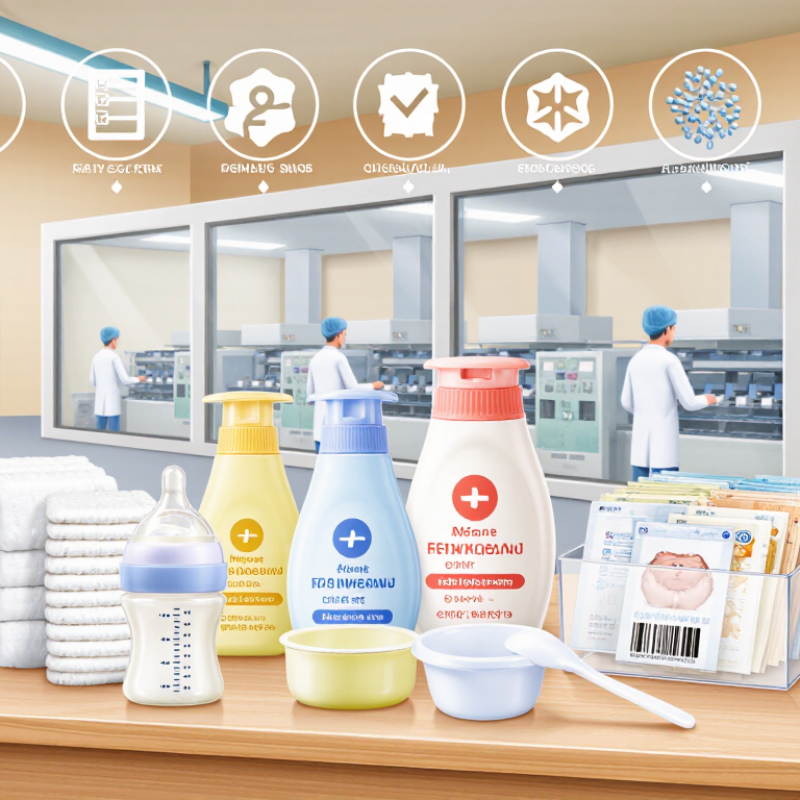
2026 Best OEM Baby Care Products Suppliers?

Global Baby Care Market Growth: Grand View Research’s 2024–2030 Forecast

2026 Best OEM Baby Care Products Suppliers?

Grand View Research estimates the global baby care products market at about USD 88.7 billion in 2023. Its 2024–2030 forecast indicates a compound annual growth rate near 5.7%. Growth is supported by rising birth-care awareness, premium hygiene demand, and wider online distribution. Product categories include skincare, haircare, toiletries, and feeding-related items.

For OEM buyers, this forecast signals stronger demand for gentle formulas and transparent sourcing. Supplier evaluation should include stability testing, microbiological controls, ingredient traceability, and documented quality systems. Packaging also matters. Parents often inspect pump function, label clarity, and leak resistance before repeating a purchase. Market growth does not guarantee every factory performs well. That assumption needs challenging.

Tips:

Request recent batch records, test reports, and production samples before signing. Compare minimum order quantities with realistic sales forecasts. Ask how suppliers manage formula changes and rejected batches. Independent laboratory verification adds confidence, especially for products used on newborn skin. Grand View Research provides a useful market direction, but forecasts remain estimates. Exchange rates, birth-rate changes, and regulatory updates can alter actual results. Supplier decisions should combine this forecast with local customer research and hands-on product testing.

OEM Baby Care Categories and Demand Signals from Euromonitor 2024 Data

2026 Best OEM Baby Care Products Suppliers?

Euromonitor International’s 2024 baby and child-specific products data points to a more selective market. Declining birth rates are reducing volume in several regions, while parents spend more on safety and sensitive-skin care. This changes the OEM opportunity. High-demand categories include diapers, wipes, baby wash, lotions, feeding accessories, and travel-size hygiene kits.

Euromonitor’s 2024 analysis also highlights premiumization and convenience as important demand signals. Suppliers should offer fragrance-free formulas, clear ingredient records, recyclable packaging, and compact formats. Products for newborn skin need documented stability testing and controlled manufacturing. ISO 22716-based cosmetic practices can strengthen production reliability. Still, certification alone does not prove good performance.

Digital research affects purchasing decisions. The 2024 Global Consumer Insights Pulse Survey from PwC reports that consumers remain concerned about value, trust, and product transparency. OEM suppliers should provide batch traceability, microbial testing, safety assessments, and responsive documentation. Small trial orders can reveal leakage, pump failure, or packaging damage before a larger launch. These details matter.

Data is not destiny. Euromonitor signals may describe broad markets, but local birth trends and regulations can differ sharply. A supplier’s forecast may also be too optimistic. Buyers should compare regional demand, minimum order quantities, testing timelines, and complaint records before choosing a manufacturing partner.

Supplier Qualification Using ISO 22716 GMP and CPSC Compliance Standards

2026 Best OEM Baby Care Products Suppliers?

Supplier Qualification Using ISO 22716 GMP and CPSC Compliance Standards

Choosing an OEM baby care supplier requires more than comparing unit prices. ISO 22716 GMP shows how a facility controls production, hygiene, storage, and records. Ask to inspect batch procedures, staff training logs, cleaning schedules, and raw material release forms. A polished certificate is useful, but it cannot replace direct evidence.

For CPSC compliance, review the finished product, packaging, and intended age group together. Request applicable test reports from qualified laboratories, including checks for physical hazards, restricted substances, labeling, and small parts. Confirm that each report matches the exact formula, color, size, and package you will sell. A generic report may look convincing, yet it can leave serious gaps.

Traceability should work like a clear trail from ingredient lot to shipped carton. Suppliers should explain complaint handling, sample retention, corrective actions, and recall readiness. Visit the factory when possible, even if the facility appears smaller than expected. Real production areas can reveal more than presentation rooms. No checklist is perfect. I would also review one failed batch and ask what changed afterward. Hesitation there deserves careful attention. Compliance must be checked against current destination-market requirements, not assumed from ISO certification alone.

Comparing MOQ, Lead Times, Certifications, and Private-Label Capabilities

Selecting the best OEM baby care supplier requires more than comparing quoted prices. Grand View Research estimates the global baby care products market reached about USD 215 billion in 2023. That scale increases pressure on factories, materials, and inspection teams. Ask for MOQs by component, not only finished units. A 1,000-unit MOQ may become 5,000 when custom bottles, labels, and cartons are included. Request pricing at 500, 1,000, and 3,000 units. This exposes hidden tooling costs.

Lead times should be separated into sampling, testing, production, and shipping. A practical quotation might show 7–14 days for samples and 30–60 days for production. However, seasonal capacity can extend schedules. Deloitte’s 2024 Global Chief Procurement Officer Survey highlights continued supply-chain resilience concerns, making backup production capacity valuable. Require a written delay policy and recent on-time delivery records. I would not trust a perfect spreadsheet without factory evidence.

Certifications need product-level verification. ISO 9001 supports quality management, while ISO 22716 is relevant to cosmetic manufacturing. For toys or feeding accessories, applicable safety standards differ by market. Check laboratory reports, material declarations, batch traceability, and certificate ownership. FDA registration alone does not prove product approval, and certificates can be outdated or unrelated to the factory. Private-label capability should include artwork control, formula ownership, multilingual packaging, and change notification. A small pilot order is safer, though it may cost more per unit. That trade-off is easy to underestimate.

Building a 2026 OEM Shortlist with Audits, Testing, and Cost Benchmarks

Building a 2026 OEM shortlist requires more than comparing unit prices. Grand View Research valued the global baby care products market at USD 215.13 billion in 2023, with 5.1% projected annual growth through 2030. That growth increases supplier competition, but it also rewards disciplined verification.

Request ISO 22716 evidence, recent audit findings, batch records, and corrective-action logs. Review the factory floor, not only polished certificates. Check water treatment, allergen controls, filling lines, and retained samples. Testing should match the product risk. Consider microbiology, heavy metals, preservatives, migration, and packaging compatibility. Map requirements for every destination market.

Our practical planning benchmark is USD 1,500–4,000 for a focused factory audit and USD 800–3,000 for baseline laboratory testing per formula. These are budgeting ranges, not universal market averages. Add costs for stability studies, repeat testing, translation, and small production runs. A low quote can hide weak sampling or incomplete methods.

Ask for three comparable quotations. Compare test methods, sample quantities, turnaround time, and accreditation scope. Do not accept “passed” without raw reports. Our first shortlist was too price-driven. That was a mistake. Supplier scoring should weight traceability, complaint response, and change-control discipline. Cosmetic appearance still matters, but documented control matters more.

FAQS

What should I check when qualifying an OEM baby care supplier?

Review hygiene controls, production records, staff training, cleaning schedules, and raw material release forms. A polished certificate is not enough. Ask for direct evidence from actual production.

Why is ISO 22716 GMP relevant to baby care manufacturing?

It shows how a facility manages hygiene, production, storage, and documentation. It does not prove every product is suitable for every market. That distinction matters.

What should safety test reports include?

Reports should match the exact formula, color, size, packaging, and intended age group. Request checks for physical hazards, restricted substances, labeling, and small parts. Generic reports can leave serious gaps.

How can I verify supplier traceability?

Follow the trail from ingredient lot to finished carton. Ask about sample retention, complaints, corrective actions, and recall readiness. Test one batch record yourself.

What does a practical MOQ review involve?

Request minimum quantities for bottles, labels, cartons, and finished units separately. A 1,000-unit order may require 5,000 custom components. Hidden tooling costs can surprise you.

How should I compare supplier lead times?

Separate sampling, testing, production, and shipping schedules. Samples may take 7–14 days. Production may take 30–60 days. Ask for delay policies and recent delivery records.

Which certifications and documents deserve careful verification?

Check certificate ownership, expiration dates, product scope, laboratory reports, and material declarations. Quality-management certification alone does not prove product compliance. I would verify every document twice.

What should private-label capability include?

Confirm artwork control, formula ownership, multilingual packaging, and change notifications. A pilot order can reveal problems before larger production begins. It may cost more per unit. That trade-off is easy to underestimate.

Should I visit the supplier’s factory?

Visit when possible, even if the facility looks smaller than expected. Production rooms may reveal more than polished presentation areas. Reviewing one failed batch is useful. Supplier hesitation deserves careful attention.

Conclusion

This guide explains how to identify reliable OEM Baby Care Products suppliers for the 2026 market. It reviews expected global baby care growth through 2030 and highlights demand signals across skincare, bathing, hygiene, feeding, and daily-care categories. The discussion focuses on selecting products that meet changing consumer expectations for safety, gentle formulas, functional packaging, and responsible production, while avoiding unsupported market claims.

It also presents a practical supplier-evaluation framework based on ISO 22716 good manufacturing practices, applicable consumer-product safety requirements, product testing, and complete documentation. Buyers can compare minimum order quantities, lead times, certifications, customization options, packaging services, and private-label capabilities. Finally, the guide outlines how to build a focused 2026 shortlist through factory audits, sample evaluations, laboratory testing, quality-control reviews, and realistic cost benchmarks. This process helps buyers reduce supply risks, verify product consistency, and choose manufacturing partners capable of supporting long-term growth.

Amelia

Amelia

Amelia is a dedicated marketing professional with a strong understanding of product strategy, customer needs, and digital communication. As a key member of the company’s marketing team, she combines industry knowledge with clear, practical storytelling to help readers make informed decisions. Her......