
Beauty & OEM Skincare Insights
Expert guidance on Halal cosmetic manufacturing, private label skincare trends, and formula innovation.
Cutting-Edge Beauty Science & R&D Reports
Discover industry research, ingredient breakdowns, and strategic manufacturing advice.
Halal & GMP Compliance Guides
Learn how to build and scale competitive beauty brands in compliance with global market standards.
What Are the 2026 Top OEM Oral Care Products?
Table of Contents
The 2026 market for OEM Oral Care Products is moving beyond attractive packaging and basic private labeling. Buyers now expect measurable performance, reliable documentation, and safer material choices. Toothpaste, whitening gels, electric toothbrush heads, flossers, and children’s products must support clear consumer needs. They also need consistent manufacturing quality.
Dr. Mark S. Wolff, a respected oral-health expert, has stated, “Oral health is an integral part of overall health.” This principle matters when evaluating OEM suppliers. A product should not merely look modern on a retail shelf. Its ingredients, bristle design, flavor stability, packaging seals, and usage instructions require careful review. A supplier’s testing records and quality-control process can reveal more than a polished product catalog.
Small details matter.
For example, a toothpaste tube should open cleanly and remain sealed during shipping. A toothbrush handle should feel balanced, not slippery, when used with wet hands. Whitening products should communicate realistic expectations instead of promising instant perfection. These practical points help brands build trust while meeting applicable safety and labeling requirements.
This guide examines the 2026 top OEM Oral Care Products through performance, customization, compliance, and market relevance. Some product trends appear impressive but may lack long-term evidence. That is worth questioning. A fashionable ingredient or smart device feature does not automatically create better oral care. The strongest choices combine verified quality, useful design, responsible claims, and dependable production experience.
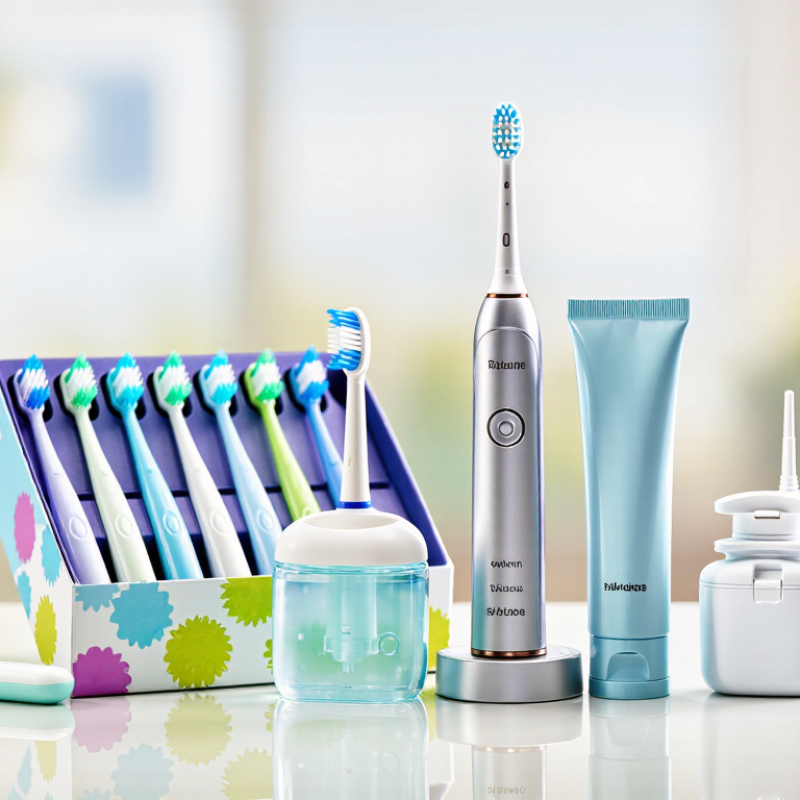
Defining OEM Oral Care Products and Their Role in 2026
OEM oral care products are items made by one manufacturer for another company to sell under its own name. OEM stands for Original Equipment Manufacturer. In oral care, this model can cover toothbrushes, flossers, interdental brushes, tongue cleaners, and oral rinses. The buyer usually defines the product concept, packaging, materials, and target users. The manufacturer manages production, testing, and supply coordination.
In 2026, leading OEM products will be judged by practical performance rather than attractive packaging. Soft-bristle toothbrushes may use carefully shaped heads for easier access around molars. Flossers may focus on comfortable handling and consistent cleaning. Refillable formats can reduce packaging, but only when hygiene controls remain strong. Customization also matters. An OEM partner can adjust handle texture, brush firmness, color, and pack size for different markets.
Quality evidence should guide every decision. Reliable suppliers need documented material checks, batch traceability, stability testing, and controlled production processes. Oral care claims should remain clear and supported by appropriate research. I have seen product concepts become too complicated, especially when convenience features replace basic usability. That is a warning. More functions do not always mean better cleaning. Cost pressure can also encourage thinner materials or rushed inspections. This is where careful sampling, independent review, and feedback from dental professionals can expose weaknesses before products reach consumers. Some designs will still need revision. That is normal.
Key Product Categories Shaping the 2026 OEM Market
What Are the 2026 Top OEM Oral Care Products?
Key Product Categories Shaping the 2026 OEM Market
Toothpaste remains the largest OEM category, but buyers now expect more precise formulas. Sensitive-teeth, enamel-care, gum-care, and low-foam options are gaining attention. Each formula needs clear ingredient records, stability testing, and documented quality controls. Small details matter. Texture, flavor strength, tube size, and dispensing accuracy can influence repeat purchases.
Toothbrushes are also moving beyond basic cleaning tools. Soft-bristle designs, compact heads, ergonomic handles, and recyclable materials support different consumer needs. Electric brush accessories, replacement heads, and travel cases create additional OEM opportunities. However, product claims must match testing evidence and regional requirements. Oral rinses and interdental products are expanding too, especially alcohol-free rinses, floss picks, interdental brushes, and water-flossing accessories. Children’s oral care remains important, with mild flavors and age-appropriate sizes.
Whitening products may continue attracting demand, yet aggressive claims can create trust problems. Careful wording is essential. Sustainable packaging is another major category, including lighter tubes, refill concepts, and reduced-plastic components. These options sound promising, but recycling systems differ across markets. A package may appear green while remaining difficult to process. OEM buyers should review material sources, factory audits, batch consistency, and after-sales support before approval. The market is not perfectly predictable. Some attractive ideas may fail when comfort, cost, or daily convenience is tested.
What Are the 2026 Top OEM Oral Care Products?
Preventive daily-care products are expected to remain the core of the 2026 OEM oral-care market. Toothpaste, manual toothbrushes, and mouthwash provide the broadest consumer coverage, while electric toothbrushes, whitening products, and interdental-care solutions support premiumization, personalization, and specialized oral-health needs. The index represents relative OEM opportunity rather than company or brand sales.
Analytical index, 2026 planning baseline = 100; based on established oral-care usage patterns, prevention needs, product scalability, and consumer demand signals. No company or brand data included.
Top 2026 OEM Toothpaste and Toothbrush Innovations
What Are the 2026 Top OEM Oral Care Products?
Top 2026 OEM Toothpaste and Toothbrush Innovations
OEM toothpaste development is becoming more evidence-led. The WHO Global Oral Health Status Report estimates that 3.5 billion people live with oral diseases worldwide. This creates demand for affordable, functional formulas. In 2026, leading OEM projects will likely focus on fluoride protection, low-abrasion polishing, sensitivity care, and clear ingredient disclosure. ISO 11609 provides a useful reference for dentifrice safety and performance testing. However, attractive packaging cannot replace clinical validation.
Toothbrush innovation is becoming more measurable. Grand View Research estimated the electric toothbrush market at about USD 3.1 billion in 2023, with continued growth expected through 2030. OEM developers are testing pressure indicators, compact brush heads, quieter motors, and recyclable handles. Manual brushes still matter, especially in price-sensitive markets. ISO 20126 supports performance testing for manual toothbrushes, including durability and bristle safety. Small details count. A soft brush should remain gentle after repeated use, not only during a showroom demonstration.
Personalization will shape private-label launches, but not every smart feature deserves investment. A timer may improve brushing habits; an unreliable sensor may create confusion. Manufacturing teams should run pilot batches, user trials, stability tests, and packaging checks before scaling. Some early concepts still look impressive but feel awkward in the hand. That weakness needs honest review. Reliable OEM products combine practical design, controlled manufacturing, and evidence that consumers can understand.
How to Evaluate OEM Oral Care Suppliers and Formulations
What Are the 2026 Top OEM Oral Care Products?
How to Evaluate OEM Oral Care Suppliers and Formulations
The strongest 2026 OEM opportunities are practical, not merely fashionable. Sensitive-teeth toothpaste, fluoride toothpaste, gum-care gels, whitening strips, and low-waste formats remain attractive categories. The World Health Organization’s Global Oral Health Status Report estimates that oral diseases affect nearly 3.5 billion people worldwide. That scale supports broad demand, but it does not guarantee product success. A supplier must match formulation strength, user needs, and local regulations.
Start with evidence, not attractive packaging. Request full ingredient percentages, stability data, microbiological test results, and batch-traceability records. Check whether the factory follows suitable GMP systems and can support ISO 22716 processes for cosmetic products. For toothpaste, review alignment with ISO 11609 and verify fluoride content through independent laboratory testing. Grand View Research reported that the global oral care market was valued at approximately 35.5 billion dollars in 2023, with continued growth forecast through 2030. Growth can hide weak suppliers.
Test the formula under real conditions. Store samples in a warm bathroom, open the cap repeatedly, and inspect separation, odor, texture, and leakage. Ask whether the abrasive level may increase sensitivity. A pleasant first sample proves little. Claims such as “repairs enamel” or “kills bacteria” need careful scientific and regulatory review. I would also compare three production batches, because one perfect pilot batch can create false confidence. Suppliers should explain minimum order quantities, lead times, rejected-batch procedures, and formula ownership clearly. If answers remain vague, pause. Reliability is part of the product.
| OEM Product Category | Typical Active or Functional System | Recommended Formulation Benchmark | Primary Consumer Need | Critical Quality Tests | Packaging and Stability Requirements | Supplier Evaluation Criteria | Commercial Potential | Development Priority |
|---|---|---|---|---|---|---|---|---|
| Adult Fluoride Toothpaste | Sodium fluoride or sodium monofluorophosphate | Common adult formulations contain approximately 1,000–1,500 ppm available fluoride; the final level must comply with the target market. | Caries prevention, daily cleaning and fresh breath | Available fluoride, pH, viscosity, abrasivity, microbiological limits, heavy metals and preservative effectiveness where applicable | Laminated tube or recyclable mono-material tube; confirm fluoride stability, phase separation resistance and shelf-life performance | Validated fluoride assay, controlled abrasive particle size, batch-to-batch viscosity control and documented regulatory support | High | Essential |
| Children's Fluoride Toothpaste | Fluoride system with mild flavor and child-appropriate abrasivity | Fluoride concentration commonly ranges from 1,000 ppm or lower depending on age, labeling rules and local regulations. | Caries prevention with improved taste acceptance | Fluoride assay, taste and odor consistency, abrasivity, microbiological safety, accidental-ingestion labeling review | Small-volume tube, tamper evidence and child-oriented pack testing; confirm compatibility of flavor oils with the tube laminate | Age-segmented formulation capability, compliant claims review, flavor-development experience and reliable dose-control processes | High | Essential |
| Sensitive-Teeth Toothpaste | Potassium nitrate, arginine-calcium system or stannous fluoride | Active level must match the ingredient's permitted use and the destination-market monograph or regulatory requirements. | Dentin hypersensitivity relief and daily cavity protection | Active assay, fluoride availability where applicable, pH, compatibility, clinical-support review and stability under humidity | High-barrier tube is preferred for moisture- or oxygen-sensitive systems; evaluate flavor migration and long-term color change | Evidence-based claim support, active compatibility expertise, accelerated stability data and robust raw-material qualification | High | Essential |
| Whitening Toothpaste | Silica-based stain-removal system with optional peroxide-compatible design | Prioritize controlled abrasivity and surface-stain removal; avoid implying bleaching unless the formulation and local rules support it. | Removal of extrinsic stains and improved tooth appearance | Relative dentin abrasivity or equivalent abrasivity assessment, cleaning performance, enamel/dentin compatibility, pH and stability | Opaque or high-barrier packaging may reduce color and flavor changes; verify dispensing consistency and abrasive settling behavior | Measured cleaning performance, transparent abrasivity data, claim-substantiation package and consistent silica sourcing | High | Essential |
| Hydroxyapatite Toothpaste | Microcrystalline or nano-hydroxyapatite, with or without fluoride | Use a clearly characterized particle grade and concentration; confirm whether nano-material disclosure or restrictions apply locally. | Enamel-support positioning and non-fluoride alternative demand | Particle-size characterization, identity and purity, heavy metals, microbial limits, dispersion uniformity, pH and stability | Protect against settling and moisture changes; use packaging that maintains uniform dosing throughout the product life | Supplier traceability, particle characterization, toxicology file, claim evidence and strong control of raw-material variability | High | Growth |
| Alcohol-Free Mouthwash | Fluoride, cetylpyridinium chloride, essential-oil or combination system | Daily-rinse systems often use approximately 0.05% sodium fluoride or another market-approved active level; confirm local requirements. | Breath freshness, plaque control and supplemental fluoride delivery | Active assay, pH, alcohol content, microbial limits, preservative effectiveness, fill-volume accuracy and taste consistency | PET or HDPE bottle with compatible cap and tamper evidence; test stress cracking, leakage, light exposure and flavor stability | Liquid blending uniformity, validated filling controls, preservative-system expertise and packaging compatibility data | High | Essential |
| Alcohol-Containing Therapeutic Rinse | Market-specific antimicrobial or therapeutic active system | Active concentration, alcohol level, directions and claims must follow the applicable medicine or OTC regulatory pathway. | Professional or therapeutic oral-care applications | Assay, microbial limits, preservative effectiveness, alcohol content, stability, container-closure integrity and dosage uniformity | Use a compatible closure and solvent-resistant packaging; perform transport, leakage and temperature-cycle testing | Pharmaceutical-quality systems, validated processes, regulatory dossier capability and controlled change management | Medium | Selective |
| Dissolvable Oral-Care Tablets | Compressed tablet with fluoride, flavor, sweetener and effervescent or soluble base | Define dissolution time, fluoride delivery and moisture limit before scale-up; tablet hardness must balance durability and rapid dispersion. | Travel convenience, low-water packaging and reduced shipping volume | Assay uniformity, dissolution time, tablet hardness, friability, moisture content, microbial limits and packaging protection | High-moisture-barrier blister or refill pouch; include desiccant evaluation and humidity-cycle testing | Direct-compression capability, moisture-control expertise, dose uniformity and packaging-engineering support | High | Growth |
| Toothpaste Tablets | Dry polishing base with fluoride or hydroxyapatite and compressed excipients | Tablets should maintain shape during transport while dispersing effectively during brushing; use a validated active-content target. | Plastic-reduction positioning and portable oral care | Active uniformity, friability, hardness, dissolution or dispersion, moisture uptake and microbiological quality | Refillable container or moisture-barrier pouch; verify closure performance after repeated opening and closing | Tablet scale-up experience, humidity-controlled manufacturing, sustainable-packaging validation and reliable dosing accuracy | High | Growth |
| Soft-Bristle Manual Toothbrush | End-rounded nylon or equivalent synthetic filament | Specify bristle diameter, trim profile, tuft retention, handle ergonomics and target brushing-force comfort. | Daily plaque removal with a gentle gum-care profile | Bristle end-rounding, tuft pull-out, fatigue resistance, handle strength, dimensional checks and packaging integrity | Ventilated blister, paperboard pack or recyclable pack; control filament deformation during storage and transport | Automated end-rounding inspection, process capability data, material traceability and consistent tufting performance | High | Essential |
| Interdental Brush | Coated wire core with nylon or elastomeric filaments | Offer a clinically useful size range and clearly defined wire strength, filament density and insertion comfort. | Interproximal plaque removal and orthodontic-care support | Wire fatigue, tip safety, filament retention, dimensional accuracy, corrosion resistance and packaging cleanliness | Individual protective packaging is recommended; protect against wire deformation and maintain size identification | Precision forming, size-control systems, safety testing, orthodontic-use experience and low-defect manufacturing | Medium | Selective |
| Floss Picks and Dental Floss | PTFE, nylon or expanded floss with optional wax and flavor | Specify shred resistance, tensile strength, sliding performance, filament smoothness and handle ergonomics. | Convenient interdental cleaning and travel use | Tensile strength, shredding, length or count accuracy, handle integrity, flavor stability and packaging seal strength | Moisture-resistant dispenser or individual pack; evaluate sharp edges, contamination control and dispensing reliability | Stable polymer sourcing, controlled extrusion or braiding, automated inspection and dependable packaging-line performance | High | Essential |
| Electric Toothbrush Replacement Heads | Interchangeable head with synthetic bristles and engineered neck | Confirm mechanical compatibility only with the intended handle family; define bristle wear, vibration tolerance and replacement interval. | Recurring replacement sales and powered-brushing users | Connection fit, insertion and removal force, bristle retention, fatigue testing, dimensional accuracy and packaging protection | Individual hygienic packaging with protective bristle cover; perform vibration, drop and transport testing | Tight dimensional control, compatibility testing, tooling capability, mold maintenance and counterfeit-resistant coding | High | Essential |
| OEM Supplier Qualification Package | Quality, regulatory, technical and commercial capability | Require documented specifications, approved raw-material lists, change-control procedures, retained samples and traceability. | Reliable scale-up, compliant launch and consistent repeat orders | ISO 22716 or equivalent cosmetic GMP evidence where applicable, batch records, audits, complaint handling and corrective-action data | Confirm packaging specifications, artwork control, stability protocol, transport testing and minimum shelf-life at delivery | Score formulation, quality, capacity, compliance, lead time, MOQ, tooling ownership, IP confidentiality and after-sales support | Required | Mandatory |
Emerging Trends in Customizable Oral Care Manufacturing
In 2026, OEM oral care manufacturing is moving beyond standard toothpaste and identical plastic brushes. Customization now reaches formula texture, brush geometry, packaging size, and digital label content. Contract manufacturers are testing low-abrasion powders, mineral-based ingredients, and milder flavor systems for sensitive users. Each change requires stability, microbiological, and compatibility testing before scale-up. That discipline matters.
Manufacturing teams increasingly use modular production lines. A single base formula can support several flavors, tube sizes, or active-ingredient options. This flexibility helps smaller sellers order practical volumes without carrying excessive inventory. It also supports regional preferences, such as compact travel kits or refillable dispensers. However, customization can complicate cleaning validation and batch traceability. Small details matter. A beautiful package means little if production records are incomplete.
Experienced OEM buyers should request pilot samples, ingredient specifications, test reports, and clear claims documentation. They should inspect filling accuracy, seal strength, bristle trimming, and storage performance. Consumer feedback can reveal practical issues, such as a cap becoming slippery near a bathroom sink. Not every trend wins. Refill systems may reduce packaging, yet their pumps can add material and maintenance demands. A common manufacturing lesson is easy to overlook: user experience must be tested alongside the formula. Promising prototypes can fail when comfort, grip, or dispensing speed receives too little attention.
FAQS
OEM products are made by one manufacturer for another company’s own name. They may include toothpaste, toothbrushes, flossers, rinses, and tongue cleaners.
Sensitive-teeth toothpaste, soft-bristle toothbrushes, gum-care gels, interdental brushes, and alcohol-free rinses may remain popular. Demand is never guaranteed.
Review ingredient percentages, fluoride levels, stability results, microbiological tests, texture, flavor strength, and dispensing accuracy. Small details affect repeat purchases.
Store samples in a warm bathroom. Open the cap repeatedly. Check separation, odor, texture, leakage, and changes after several weeks.
Request material checks, batch-traceability records, production controls, factory audits, and independent laboratory results. One excellent sample proves little.
Claims should match scientific evidence and local requirements. Words such as “repairs enamel” need especially careful review.
Refill formats, lighter tubes, and reduced-plastic components may reduce waste. However, recycling systems differ across markets. Green-looking packaging can still be difficult to process.
Buyers can adjust handle texture, brush firmness, head size, colors, flavors, tube size, and package quantity. Extra features may weaken basic usability.
Cost pressure may cause thinner materials or rushed inspections. Complex designs may feel impressive but clean poorly. Revision is normal.
Confirm minimum order quantities, lead times, rejected-batch procedures, formula ownership, testing responsibilities, and after-sales support. Vague answers deserve a pause.
Conclusion
In 2026, OEM Oral Care Products will play an important role in helping businesses develop customized, market-ready solutions without managing every stage of production independently. This article explains how OEM manufacturing supports product differentiation, efficient scaling, and flexible formulation design across toothpaste, toothbrushes, mouthwash, floss, and other daily oral care categories. It also examines how consumer demand for convenient, preventive, gentle, and environmentally responsible products is shaping new development priorities.
The discussion highlights innovations such as targeted toothpaste formulas, functional ingredients, ergonomic toothbrush designs, and customizable packaging. It also provides practical guidance for evaluating OEM suppliers, including manufacturing capabilities, quality systems, formulation expertise, testing procedures, regulatory awareness, minimum order requirements, and communication standards. Finally, the article explores emerging trends in personalized oral care manufacturing, sustainable materials, smart product concepts, and adaptable product lines, offering a clear framework for selecting suitable partners and creating products that meet changing consumer expectations.

Blog Tags: