
Finding a dependable Cruelty-Free Cosmetics OEM partner in China takes more than comparing product catalogs. China has manufacturers offering color cosmetics, skincare, custom formulas, and private-label production. Their capabilities and quality systems can differ widely. A polished website is not evidence of consistent production. Details matter. Ask for proof.
Cruelty-free claims deserve particular care because standards and certification programs may use different criteria. Request current documentation, confirm which products and production stages it covers, and ask how suppliers assess ingredient sources. Ask for proof. A clear answer should be specific, not just reassuring. It should also be possible to review relevant records.
A practical supplier review can include factory certifications, quality-control procedures, sample consistency, minimum order quantities, lead times, and packaging options. Request samples from the proposed production formula, then assess texture, shade, scent, and packaging performance. Check whether the manufacturer can explain its testing approach and support your target market’s requirements. Verify details directly; documents may need updating, and a promising first sample cannot guarantee every batch will match.
No manufacturer is perfect. Communication can slow down, and small specification changes can affect a product. That is worth considering before signing. This guide introduces China-based OEM manufacturers and the questions buyers can use to compare them carefully. The aim is not to promise a risk-free choice, but to help you make a more informed one.
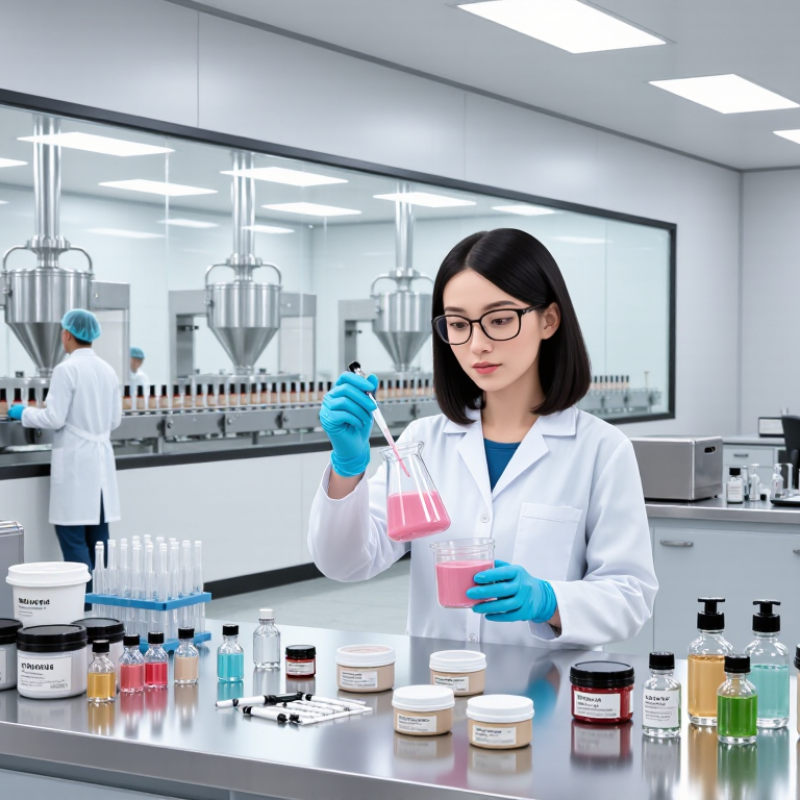
Define Cruelty-Free OEM Criteria: The 3Rs and ISO 22716:2007
For a cruelty-free cosmetics OEM, a claim needs documented boundaries, not just a logo. Define whether it covers finished formulas, ingredients, suppliers, and contract laboratories, and set a clear cutoff date. Apply the 3Rs: replace animal procedures with validated alternatives where available, reduce animal use where necessary, and refine procedures to limit distress. Replacement is central to cosmetics sourcing, but supplier declarations should be checked against purchase records, test requests, and change-control files. Paperwork matters.
The OECD Test Guideline 497 describes three defined approaches for assessing skin sensitisation, combining in vitro, in chemico, and computational information. The guideline also sets out applicability domains; no single method answers every safety question. This is a useful technical benchmark, not proof that every ingredient has a non-animal evidence package. ISO 22716:2007 provides good manufacturing practice guidance for cosmetics production, control, storage, and shipment. It supports traceable batch records and corrective action, but does not certify cruelty-free status. Ask an OEM to show supplier qualification records, sample batch files, deviation logs, and audit trails. One gap deserves attention: an upstream material source can change after a supplier declaration is issued. Review the records routinely.
Best Cruelty-Free Cosmetics OEM Manufacturers in China? — Define Cruelty-Free OEM Criteria: The 3Rs and ISO 22716:2007
| Evaluation Dimension | What to Verify | Useful Evidence | Interpretation and Limitations |
|---|---|---|---|
| Replacement (the first of the 3Rs) | Whether the supplier uses suitable non-animal methods and existing safety information instead of proposing new animal tests for cosmetic ingredients or finished products. | Written testing policy; test-method list; ingredient safety assessments; records showing how non-animal data are considered. | The 3Rs are Replacement, Reduction, and Refinement. They are principles for responsible research, not a standalone cruelty-free certification or proof that a product has never been tested on animals. |
| Reduction | Whether the supplier avoids unnecessary duplicate testing and uses relevant existing data, validated methods, and appropriate study designs. | Documented review of available data; rationale for requested tests; approval records for test plans and any external laboratory work. | Reduction means using fewer animals when animal use cannot be avoided; it does not mean that animal testing is absent. |
| Refinement | If animal studies are legally required or otherwise conducted, whether procedures are designed to minimize pain, distress, and lasting harm. | Ethical review documentation where applicable; study protocols; humane-endpoint and animal-welfare procedures. | Refinement improves animal welfare but is not equivalent to a cruelty-free policy. Clarify whether the buyer’s standard prohibits all animal testing or permits limited exceptions. |
| Finished-product testing | Whether the OEM tests the finished product on animals, commissions such testing, or permits another party to do so on its behalf. | Signed policy covering the OEM, subcontractors, and testing laboratories; contract clauses; supplier and laboratory declarations. | Ask for the policy’s scope, effective date, exceptions, and the products or markets it covers. A general statement without defined boundaries is difficult to assess. |
| Ingredient and supplier controls | How the OEM checks ingredient suppliers’ animal-testing policies and tracks ingredients, changes, and supporting safety documents. | Supplier questionnaires; ingredient specifications; safety data; change-control records; traceability and document-review procedures. | Supplier declarations are useful but should be supported by a defined review process. Ingredient safety documentation does not, by itself, establish a cruelty-free status. |
| Third-party testing and subcontracting | Whether testing is outsourced and whether contracts require external laboratories and other subcontractors to follow the agreed animal-testing policy. | Subcontractor list; signed agreements; audit or assessment records; documented approval of external test methods and laboratories. | Review the full supply chain covered by the claim. A manufacturer’s own policy may not automatically cover all suppliers, clients, or third parties. |
| ISO 22716:2007 — Cosmetics GMP | Whether the facility’s cosmetic good manufacturing practices cover personnel, premises, equipment, raw materials, production, quality control, documentation, deviations, complaints, and storage and shipment. | Current certificate and scope, where certified; issuing body details; audit records; relevant procedures and manufacturing records. | ISO 22716:2007 provides guidelines for cosmetic GMP. GMP supports consistent manufacturing and product quality; it does not certify cruelty-free status or establish that animal testing was not used. |
| Claims and market-specific requirements | Whether proposed “cruelty-free” wording is supported by evidence and reviewed for the intended sales markets. | Claim-substantiation file; defined claim scope; legal or regulatory review; records supporting each public statement. | Requirements and accepted claim interpretations can vary by market. Do not assume that one policy or certificate has the same legal meaning everywhere. |
| Auditability and ongoing oversight | Whether the buyer can review relevant records and receive notice of changes to ingredients, testing practices, subcontractors, or manufacturing sites. | Audit rights in the quality agreement; record-retention terms; change-notification procedure; corrective-action records. | Written commitments are stronger when they can be checked and are maintained throughout the product’s lifecycle. |
| Practical selection rule | Assess cruelty-free policy evidence separately from ISO 22716:2007 GMP evidence. A credible OEM evaluation should define the no-animal-testing scope, cover relevant suppliers and subcontractors, and provide auditable records; GMP certification alone is not proof of cruelty-free status. | ||
FAQS
Define whether it covers finished formulas, ingredients, suppliers, and contract laboratories. Set a clear cutoff date. A logo alone is not enough.
Replace animal procedures with validated alternatives where available. Reduce use when needed, and refine procedures to limit distress. Keep the reasons documented.
Compare declarations with purchase records, test requests, change-control files, and audit trails. Recheck when a raw material source changes. Easy to miss.
No. Some defined approaches combine laboratory, chemical, and computational evidence. Their applicability has limits. One method cannot answer every safety question.
It supports traceable batch records, production controls, storage, shipment, and corrective actions. It does not certify cruelty-free status. Important distinction.
Since May 2021, eligible general cosmetics may qualify for an exemption with required documents and safety assessments. Not automatic. Some product categories may fall outside the pathway.
Ask for the filing plan, safety assessment materials, and GMP evidence. Match ingredient lists and labels to the dossier. Keep version-controlled records.
Ask who develops the formula and how many revisions are included. Confirm adjustments for texture, fragrance, and packaging. Check the MOQ for each shade, scent, or container. A cream can separate in heat.
Check the issuer, scope, and expiry date. Confirm what each certificate covers; a factory certificate may not cover every finished product. Ask for stability, microbial quality, and packaging compatibility results. Vague answers happen, and I would ask again.
Conclusion
Choosing a reliable Cruelty-Free Cosmetics OEM in China requires looking beyond a supplier’s marketing claims. This overview explains how the 3Rs—replacement, reduction, and refinement—can guide animal-testing policies, and why quality-management practices aligned with ISO 22716:2007 matter. It also outlines how to check whether a product may qualify for China’s 2021 animal-testing exemptions for eligible general cosmetics, while recognizing that eligibility depends on applicable requirements and documentation.
A practical comparison should assess formulation expertise, minimum order quantities, testing procedures, and relevant certifications. Buyers should also examine policies covering both finished products and ingredient suppliers, and request clear records showing how animal testing is addressed throughout the supply chain. The final ranking approach focuses on verifiable compliance, manufacturing capability, and transparency, helping businesses identify OEM partners whose practices and documentation align with their product goals.