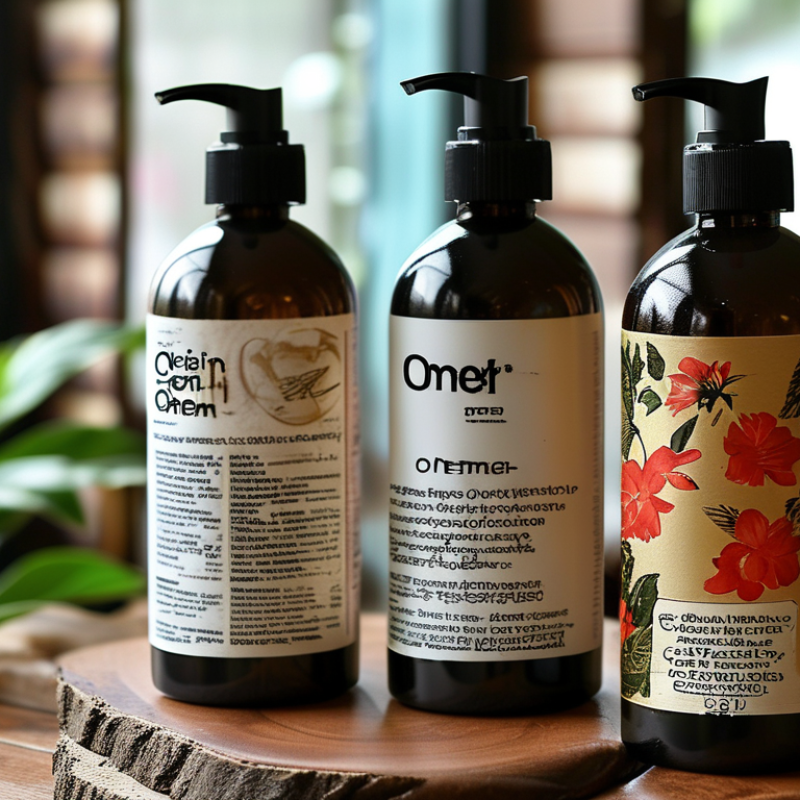
Choosing the right OEM Hair Care Products requires more than attractive packaging or a low quotation. A shampoo may look premium online, yet its texture, fragrance, and performance can change during storage. Experienced brand owners examine the formula, supplier records, testing documents, and production consistency before making a commitment. This practical guide introduces seven useful tips for evaluating manufacturers with greater confidence.
Start with product fit. Review the ingredient list, target customer, hair concerns, and expected product claims. Ask for laboratory samples, not only catalog images. Test the shampoo after several washes, then observe its scent and viscosity after heat exposure. Confirm whether the supplier can support suitable packaging, batch sizes, and realistic delivery schedules. Small details matter.
A reliable OEM partner should explain quality procedures clearly. Look for traceable raw materials, documented testing, responsive communication, and experience with your target market. Certifications can support credibility, but they should be verified rather than accepted at face value. Request stability data, safety information, and a written specification before approving bulk production. Clear records reduce unpleasant surprises.
Still, no checklist is flawless. A promising sample may not represent every future batch. I have seen strong formulas weakened by poor pumps, unclear instructions, or rushed approvals. That is why careful brands keep written feedback and inspect production samples. These seven tips will not remove every risk, but they can make your decision more informed, practical, and dependable.
Define Demand Using the Global Hair-Care Market’s $90B+ 2024 Scale
Choosing OEM hair-care products starts with demand, not packaging. Mordor Intelligence estimates the global hair-care market at about $96.7 billion in 2024. Grand View Research also reports sustained market growth, supported by scalp care, repair, and convenience formats. These figures show opportunity, but they do not guarantee sales for every formula.
Use seven checks before selecting an OEM partner. Define your target user and hair concern. Compare regional climate and washing habits. Review ingredient safety documents and stability results. Request small samples before placing a large order. Confirm minimum order quantities, production capacity, and lead times. Check packaging compatibility with the formula. Finally, calculate landed cost, including testing, freight, duties, and likely waste.
A spreadsheet can still mislead. My first demand estimate would be too optimistic if it ignored repeat purchase rates. Industry growth is an indicator, not proof of local demand. The 2024 Personal Care and Cosmetics market data from Euromonitor highlights uneven category performance across regions, so broad global numbers need careful interpretation. Ask for batch records, quality specifications, and traceability documents. A reliable OEM supplier should explain viscosity changes, fragrance variation, and shelf-life limits without vague promises. Test products under realistic bathroom conditions, including heat, humidity, and repeated opening. Small details matter.
7 Tips for Choosing OEM Hair Care Products: Define Demand Using the Global Hair-Care Market’s $90B+ 2024 Scale
The global hair-care market was estimated at approximately $94.35 billion in 2024. Based on a reported forecast CAGR of about 2.7%, the market could reach roughly $116.43 billion by 2032. OEM buyers can use this growth baseline to assess product demand, production capacity, packaging requirements, and long-term category potential before selecting a formula or supplier.
Source note: Rounded global market estimates compiled from publicly available 2024 hair-care market research projections. Values are shown in USD billions.
Vet OEM Facilities Against ISO 22716 GMP and ISO 9001 Evidence
7 Tips for Choosing OEM Hair Care Products
Vet each OEM facility against ISO 22716 GMP and ISO 9001 evidence, not attractive packaging alone. ISO 22716:2007 covers hygiene, production, storage, quality control, and complaint handling. Ask for a current audit report, certificate scope, site address, and corrective-action records. ISO 9001 evidence should identify the certified facility and covered activities. The ISO Survey 2022 recorded 1,265,216 ISO 9001 certificates worldwide across 189 countries. That figure shows its broad use, but certification does not guarantee excellent hair products. Check supplier qualification, batch records, testing methods, stability data, and change-control procedures. Request three recent anonymized batch files. Small details matter.
During a site review, inspect cleanable surfaces, labeled containers, calibrated instruments, and separate material flows. Confirm incoming ingredients receive identity and contamination checks. Review microbiological testing, preservative evaluation, and retained-sample storage. Ask how the facility handles deviations and customer complaints. A strong answer includes dates, owners, and verification results. A vague answer is a warning. ISO 22716 is a GMP guideline, so interpret claims carefully; an “ISO 22716 certified” statement may reflect different certification arrangements. Verify the issuing body and audit scope independently. I would also test one pilot batch before signing a large order. This step can expose weak mixing, unstable fragrance, or inconsistent viscosity. No document replaces evidence from the floor. Perfect paperwork is reassuring, but real manufacturing is rarely perfect. Reflect on gaps openly, then require measurable corrective actions.
Compare MOQ, Capacity, Lead Time, and Unit Economics Before Sampling
7 Tips for Choosing OEM Hair Care Products
Before requesting samples, define your expected monthly demand and acceptable order size. A low MOQ sounds attractive, but it may hide higher unit costs or limited material choices. Ask whether the MOQ applies per product, scent, size, or packaging style. Confirm current production capacity, not only the factory’s maximum claim. A supplier producing 20,000 units monthly may struggle with a sudden 50,000-unit launch. Request recent production records and realistic capacity ranges.
Lead time needs more detail than one number. Separate formula development, raw material purchasing, filling, testing, and shipping. Ask what happens if a key ingredient arrives late. Build a small buffer. I once compared suppliers using production time alone and underestimated the launch schedule. That was avoidable. Check whether samples use the final packaging, because packaging can change both timing and appearance. Also confirm shelf-life testing and batch documentation before approval.
Calculate unit economics beyond the quoted factory price. Include packaging, artwork, testing, freight, duties, inspection, and possible storage fees. Compare the total landed cost at different MOQ levels. A larger order may reduce the unit price but tie up cash for months. Request payment terms and a clear quotation validity period. Keep a simple spreadsheet with best-case and cautious scenarios. Then sample the option that balances cost, capacity, and timing, rather than choosing the cheapest quote. My own estimates still contain uncertainty, so I leave room for revisions.
7 Tips for Choosing OEM Hair Care Products - Compare MOQ, Capacity, Lead Time, and Unit Economics Before Sampling
| Supplier Profile |
Typical Product |
MOQ
(Units/SKU) |
Monthly Capacity
(Units) |
Sample Lead Time
(Business Days) |
Bulk Lead Time
(Days) |
Ex-Works Unit Cost
(USD) |
Packaging Cost
(USD/Unit) |
Estimated Gross Margin
at $12 Retail |
Best Fit |
| Low-MOQ specialist |
Sulphate-free shampoo, 300 ml |
500 |
50,000 |
7–10 |
25–35 |
$1.55 |
$0.42 |
83.6% |
Startups testing demand |
| Mid-volume manufacturer |
Moisturizing conditioner, 300 ml |
1,000 |
120,000 |
8–12 |
30–40 |
$1.35 |
$0.38 |
85.6% |
Growing online brands |
| High-capacity producer |
Anti-dandruff shampoo, 250 ml |
3,000 |
300,000 |
10–15 |
35–50 |
$1.10 |
$0.30 |
88.3% |
Established retail programs |
| Premium formula producer |
Bond-repair hair mask, 250 g |
1,500 |
80,000 |
12–18 |
40–55 |
$2.85 |
$0.65 |
70.8% |
Premium positioning |
| Flexible formulation partner |
Leave-in scalp serum, 100 ml |
1,000 |
60,000 |
10–14 |
35–45 |
$2.10 |
$0.55 |
77.9% |
Specialized treatment lines |
| Large-scale contract filler |
Daily-use shampoo, 500 ml |
5,000 |
500,000 |
7–12 |
30–45 |
$0.95 |
$0.28 |
89.8% |
High-volume distribution |
| Small-batch natural producer |
Solid shampoo bar, 80 g |
300 |
25,000 |
10–15 |
25–40 |
$1.25 |
$0.35 |
86.7% |
Eco-conscious pilot launches |
How to compare: Review MOQ against your forecast, verify that monthly capacity can support repeat orders, add sample and production lead times to your launch calendar, and calculate margin using the formula, packaging, freight, duties, testing, and fulfillment costs—not the unit price alone.
Cost figures are indicative OEM planning benchmarks in USD for standard formulations and packaging; final quotations vary by ingredients, testing requirements, decoration, order volume, destination, and Incoterms.
Validate Formula Safety with ISO 17516 and ISO 11930 Testing
Choosing OEM Hair Care Products: Validate Formula Safety with ISO 17516 and ISO 11930 Testing
A reliable OEM evaluation should begin with microbiological evidence, not attractive packaging. ISO 17516 testing checks whether a cosmetic formula contains acceptable levels of microorganisms. The laboratory examines total microbial counts and specific objectionable organisms. Ask for reports linked to the exact formula, batch, and production date. Generic documents are weak evidence. They may not represent your product.
ISO 11930 evaluates preservative protection through a preservation efficacy, or challenge, test. The laboratory introduces selected microorganisms into the product and monitors their reduction over time. This matters for shampoos, conditioners, masks, and other water-based formulas. Request details about the test method, sample condition, and acceptance results. Packaging also deserves attention. A jar used near a wet shower may face greater contamination risk than an airless container. The formula and package must work together.
Do not treat either standard as a complete safety guarantee. ISO 17516 focuses on microbial quality, while ISO 11930 focuses on preservation performance. Neither replaces stability, compatibility, irritation, or local regulatory reviews. I have seen supplier documentation look complete but lack sample identification. That gap deserves questions. Small details matter. Check laboratory competence, test dates, deviations, and corrective actions. A failed challenge test should lead to reformulation or stronger packaging, not selective reporting. Even a passing result needs context, because storage, filling hygiene, and consumer use can change real-world performance.
Confirm Claims, Labels, Packaging, and 12–24-Month Stability by Market
Tip 1:
Confirm every product claim before ordering. “Strengthens,” “repairs,” and “natural” need evidence, not attractive wording. Ask for test reports, ingredient data, and claim substantiation. I once trusted a sales sheet too quickly. That was a useful warning.
Tip 2:
Review the full label for each target market. Check ingredient names, warnings, usage directions, batch codes, and responsible-party details.
Tip 3:
Verify translations with qualified local reviewers. Small wording errors can change consumer expectations.
Tip 4:
Match packaging with shipping conditions. A pump may leak in heat, while a jar may crack during cold transport. Request samples and perform drop, seal, and compatibility checks.
Tip 5:
Request stability evidence covering 12 to 24 months. The required period depends on the market, formula, container, and storage conditions. Review testing at different temperatures, humidity levels, and light exposure.
Tip 6:
Compare the stability protocol with the planned expiry date. A short test cannot automatically support a long shelf life. Some suppliers provide incomplete files, so ask direct questions.
Tip 7:
Confirm that documents are current and traceable. Check revision dates, laboratory details, sample numbers, and manufacturing records. Keep a market-specific approval file. It may feel excessive, but missing one label detail can delay launch and create costly rework.
FAQS
Request current GMP and quality-management certificates, audit reports, site addresses, and certificate scopes. Check corrective-action records too. Packaging is not proof.
GMP evidence covers hygiene, production, storage, quality control, and complaint handling. Ask who audited the facility and when. Verify the issuing body independently.
Confirm the certificate identifies the correct facility and covered activities. The scope should include the products or processes you need. A certificate alone does not guarantee excellent products.
Look for cleanable surfaces, labeled containers, calibrated instruments, and separated material flows. Check incoming ingredient identity and contamination testing. Small details matter.
Request three recent anonymized batch files, testing methods, stability data, and change-control records. Review microbiological tests and preservative evaluations. Also inspect retained-sample storage.
Strong responses include dates, responsible owners, corrective actions, and verification results. Vague explanations are warning signs. No process is perfect.
Define monthly demand and acceptable order sizes before requesting samples. Check whether minimum quantities apply per formula, scent, size, or packaging style. Ask for realistic recent output, not maximum claims.
Separate development, ingredient purchasing, filling, testing, and shipping. Ask how delays are handled when materials arrive late. Leave a buffer. I once underestimated this.
Include packaging, artwork, testing, freight, duties, inspection, and storage fees. Compare landed costs at different order quantities. The cheapest quote may consume cash for months.
Yes, a pilot batch can reveal weak mixing, unstable fragrance, or inconsistent viscosity. Use final packaging when possible. Documents cannot replace floor-level evidence.
Conclusion
Choosing OEM Hair Care Products requires a structured evaluation that begins with market demand and customer expectations. With the global hair-care market exceeding $90 billion in 2024, businesses should identify their target segment, product positioning, and expected sales volume before contacting manufacturers. Facility verification is equally important: request evidence of ISO 22716 Good Manufacturing Practices and ISO 9001 quality-management procedures, while also reviewing production capacity, minimum order quantities, lead times, communication, and unit economics before requesting samples.
Product safety and market readiness should be confirmed through appropriate testing. Formula assessments should include microbiological safety under ISO 17516 and preservative efficacy testing aligned with ISO 11930 when applicable. Companies should also verify that product claims, ingredient lists, labels, packaging, and instructions meet the requirements of each intended market. Finally, stability testing over 12 to 24 months can help confirm that the formula, container, appearance, and performance remain consistent throughout the expected shelf life.