Interest in age-supportive skincare is growing as consumers seek products for dryness, uneven tone, and visible fine lines. The World Health Organization estimates that one in six people worldwide will be aged 60 or older by 2030. That demographic shift matters. It does not, by itself, prove that every anti-aging product works.
Grand View Research valued the global anti-aging market at approximately US$47.8 billion in 2023 and projected continued growth through 2030. The figure covers a broad market, not skincare alone, so it should be read with care. For brands exploring China’s manufacturing sector, the key question is not simply who produces the most products. It is which partner can develop a stable Anti-Aging Skincare Formulation, explain its ingredient choices, and provide suitable testing records.
A useful manufacturer comparison should examine formulation expertise, production capabilities, quality systems, and support for substantiating product claims. China’s National Medical Products Administration requires cosmetics efficacy claims to have supporting evidence, making documentation part of responsible product development. A peptide serum may look convincing in a glass bottle; reliable performance depends on more than its label. Details vary by product. No supplier should be treated as a guaranteed fit based on a directory listing alone. This guide introduces manufacturers to investigate and questions buyers can ask before choosing a partner.
China’s Anti-Aging Skincare Market: Scope, Demand, and Product Segments
China’s anti-aging skincare market is shaped by longer urban routines, rising interest in preventive care, and an aging population. Demand is not limited to mature consumers. Younger adults often seek hydration, sun protection, and products that support a more even-looking complexion. Hot, humid summers and dry indoor heating also influence texture preferences across regions.
The main product segments include serums, moisturizers, eye creams, sunscreens, and targeted treatments. Lightweight serums may feature niacinamide, peptides, or retinoid ingredients, while creams focus on moisture retention and barrier support. Sunscreen remains relevant because daily ultraviolet exposure contributes to visible skin aging. Not every trend lasts. Consumer interest can shift quickly, and ingredient popularity alone does not prove product performance.
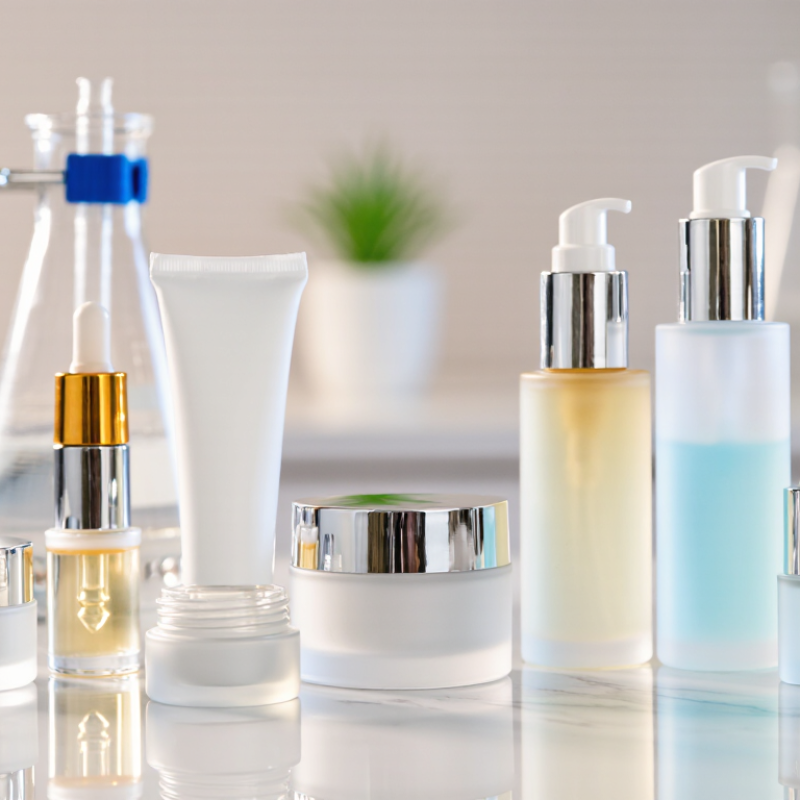
For formulation manufacturers, market fit depends on more than a compelling ingredient list. Stable textures, clear usage directions, and suitable packaging matter in daily use. A pump bottle, for example, can help limit repeated exposure to air and fingers. Testing should match the finished formula, not just individual ingredients. Claims also need careful support. Market estimates vary by research method, so precise growth forecasts deserve scrutiny. A useful product brief should define its audience, climate conditions, price range, and evidence requirements before development begins.
China Top Anti Aging Skincare Formulation Manufacturers? - China’s Anti-Aging Skincare Market: Scope, Demand, and Product Segments
| Market Dimension | Product Segment | Common Formulation Components | Typical Product Role | Demand and Formulation Considerations |
|---|---|---|---|---|
| Daily facial care | Moisturizers and anti-aging creams | Humectants such as glycerin or hyaluronic acid; emollients; peptides; niacinamide | Help moisturize skin and support the appearance of smoother, more even-looking skin. | Consumers often look for products that fit easily into daily routines. Formulators balance skin feel, hydration, ingredient compatibility, and packaging. |
| Targeted treatment | Serums and concentrated treatments | Retinoids, vitamin C derivatives, niacinamide, peptides, or exfoliating acids, depending on the product | Deliver selected cosmetic ingredients in lightweight, targeted formats. | Interest in targeted routines supports demand for ingredient-focused products. Stability, pH, irritation potential, and clear usage directions are important formulation considerations. |
| Eye-area care | Eye creams, gels, and roll-on products | Humectants, emollients, caffeine, peptides, and film-forming ingredients | Moisturize the delicate eye area and improve the temporary appearance of dryness or puffiness. | Products are commonly positioned for specific concerns such as dryness and the appearance of fine lines. Gentle textures and suitability for the intended area are key considerations. |
| At-home intensive care | Sheet masks, sleeping masks, and wash-off masks | Water-based moisturizing ingredients, soothing agents, and, in some formulas, niacinamide or peptides | Provide short-term hydration and a more intensive-feeling skincare step. | Convenience and sensory experience can influence product choice. Formula compatibility with the mask material, preservation, and directions for use matter. |
| Sun-related aging care | Daily sunscreen and moisturizer-sunscreen products | Approved UV filters appropriate to the market, plus moisturizing or antioxidant ingredients where compatible | Help protect skin from ultraviolet radiation when used as directed; sun protection is an important part of reducing UV-related skin damage. | Demand is linked to daily sun-protection routines. Products must meet applicable regulatory requirements and be supported by required testing and labeling. |
| Skin barrier support | Barrier creams and restorative moisturizers | Ceramides, fatty acids, cholesterol, glycerin, and other moisturizing ingredients | Help reduce moisture loss and support the skin barrier’s moisturizing function. | Often relevant to consumers seeking comfort alongside active treatments. Formulators consider texture, ingredient ratios, and compatibility with other routine steps. |
| Market demand drivers | Multi-step and simplified skincare routines | Ingredient combinations vary by product purpose and intended user | Address preferences for targeted routines, convenient formats, and products combining more than one cosmetic benefit. | Demand can vary by consumer age, skin concerns, price point, climate, and channel. Avoiding unsupported efficacy claims and providing clear ingredient information are important. |
| Formulation and manufacturing scope | Product development, testing, and production | Raw-material selection, emulsifiers, preservatives, antioxidants, and packaging-compatible systems | Support product stability, safety, usability, and consistent production. | Manufacturing evaluation commonly considers quality systems, regulatory compliance, stability and compatibility testing, scale-up capability, and documentation. |
This table presents general product and formulation information, not market-size estimates or rankings. Ingredient suitability, permitted use, product claims, and labeling requirements depend on the specific formula and applicable regulations.
FAQS
Serums, moisturizers, eye creams, sunscreens, and targeted treatments are common. Lightweight textures may suit humid summers.
Many seek hydration, sun protection, and a more even-looking complexion. Prevention is part of the appeal.
Formulas may include niacinamide, peptides, or retinoid ingredients. Popularity alone does not prove performance.
They should assess stability, compatibility, and skin feel. Testing the finished formula matters.
Review sample protocols, stability data, ingredient concentrations, and testing conditions. A polished dossier may still miss practical details.
Check audit documents, batch records, and procedures for handling deviations. A certificate alone tells only part of the story.
It uses controlled ultraviolet exposure on volunteers. Assessors compare skin redness on treated and untreated areas.
No. SPF mainly describes UVB protection, while UVA assessments are also relevant. Real-world application can still be uneven.
People may apply too little or miss the ears and hairline. Testing helps, but it cannot erase that gap.
Conclusion
China’s anti-aging skincare market serves consumers seeking solutions for fine lines, uneven tone, loss of firmness, and visible effects of sun exposure. Products range from serums and moisturizers to eye care and daily sun-protection formulas. A well-designed Anti-Aging Skincare Formulation balances ingredient selection, stability, skin compatibility, and the intended product format. Retinol may be considered within a 0.1–1% range, while niacinamide is commonly explored at 2–5%; the appropriate levels depend on product design, testing, and applicable requirements.
When evaluating Chinese manufacturers, compare their formulation research and development, quality systems, production capabilities, and OEM support. NMPA-related compliance and ISO 22716 good manufacturing practices are important considerations for responsible production. For products making sun-protection claims, testing should be planned carefully, with ISO 24444 providing a method for assessing SPF. Together, sound formulation work, documented quality controls, and appropriate testing help create products that meet defined performance and manufacturing expectations.