
Sky Resources Knowledge Hub

Beauty & OEM Skincare Insights

Expert guidance on Halal cosmetic manufacturing, private label skincare trends, and formula innovation.

0%

China’s clean beauty market is moving from niche demand toward measurable production capability. Grand View Research estimated the global clean beauty market at USD 6.73 billion in 2022. It also projected a 14.8% compound annual growth rate from 2023 to 2030. These figures suggest strong opportunity, but they do not identify the best OEM partner.

That decision requires closer evidence. A credible Clean Beauty OEM Manufacturing supplier should show ingredient traceability, batch records, stability testing, microbial controls, and clear quality procedures. ISO 22716-based manufacturing practices can provide useful structure. However, certification alone does not prove consistent performance. Buyers should inspect audit records, sample products, packaging compatibility, and export experience. Small details matter. Think sealed sample jars, readable lot codes, and controlled warehouse temperatures.

Mia Davis, a clean beauty and safer-chemistry specialist, has stated, “Clean beauty is not a regulated term.” Her warning remains important when comparing Chinese manufacturers. A factory may describe a formula as natural, vegan, or non-toxic without offering enough supporting evidence. The strongest supplier explains its standards instead of hiding behind marketing language. It should also communicate limitations honestly.

No manufacturer is perfect. That is worth remembering. The “top” China OEM depends on product type, target market, order volume, testing needs, and documentation quality. This article will compare those practical factors, using industry reports and supplier evidence rather than promotional claims. The goal is not to praise the largest factory. It is to identify the partner most capable of delivering safe, consistent, and transparent clean beauty products.
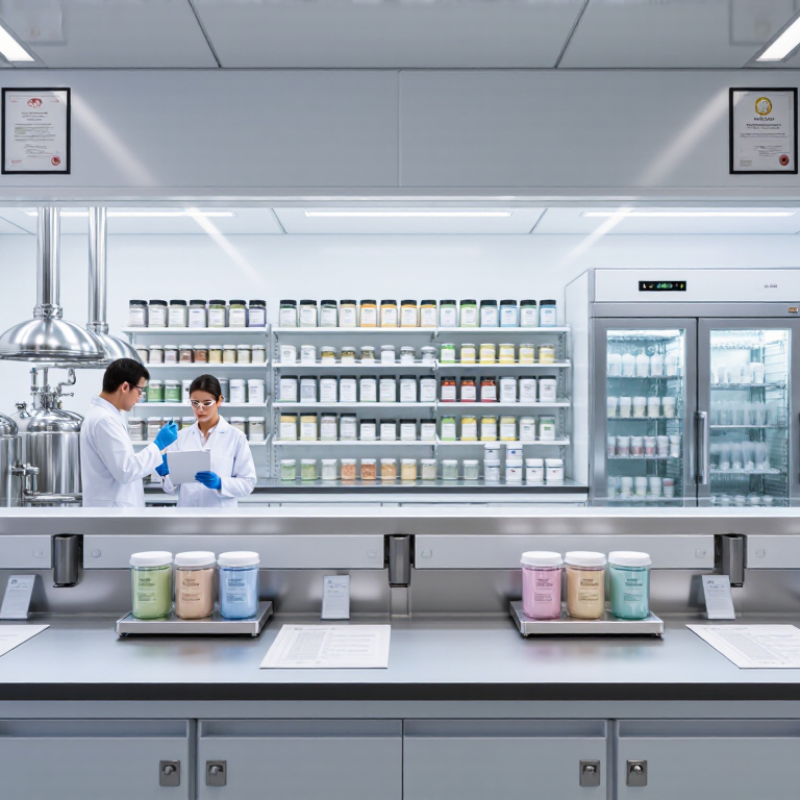
What Is the Top Clean Beauty OEM Manufacturer in China?

What Defines a Top Clean Beauty OEM Manufacturer in China?

A top clean beauty OEM manufacturer in China is defined by evidence, not polished claims. Clean beauty has no single global legal definition, so a reliable manufacturer must explain its ingredient standards clearly. It should disclose prohibited substances, sourcing limits, allergen controls, and testing methods. Vague promises are a warning sign.

According to the National Bureau of Statistics of China, cosmetics retail sales reached approximately RMB 414 billion in 2023. This scale increases the need for disciplined production and traceable supply chains. A strong OEM should operate under ISO 22716 Good Manufacturing Practices. It should also support safety assessments, stability testing, microbiological testing, and packaging compatibility checks. Technical files must match actual batch records. Otherwise, compliance becomes paperwork only.

Real experience appears during development. A capable team can adjust texture, preservative systems, fragrance levels, and filling conditions without losing product stability. It should provide sample records, raw material certificates, and clear change-control procedures. Euromonitor’s beauty and personal care research consistently identifies efficacy and ingredient transparency as important consumer priorities in China. Performance still matters.

There is room for doubt. “Natural” does not automatically mean safer, and “clean” does not guarantee better performance. Buyers should inspect audit results, testing reports, factory hygiene, and delivery history. A top manufacturer welcomes difficult questions. It does not hide behind attractive language.

What Defines a Top Clean Beauty OEM Manufacturer in China?

Practical buyer evaluation framework for clean beauty OEM selection

A strong clean beauty OEM partner should combine documented GMP-based manufacturing, full ingredient traceability, reliable formulation capability, product safety testing, sustainable packaging options, and dependable supply performance. The 100-point framework reflects the relative importance of these factors when comparing manufacturers without using company or brand data.

How the Chinese Clean Beauty OEM Industry Operates

The top clean beauty OEM manufacturer in China is not defined by factory size alone. It is measured by formulation control, ingredient traceability, testing discipline, and transparent communication. Experienced buyers usually inspect production rooms, review batch records, and ask how suppliers handle failed samples.

Chinese clean beauty OEM projects often begin with a product brief, target texture, packaging plan, and compliance requirements. The manufacturer then develops laboratory samples using plant oils, botanical extracts, gentle surfactants, or mineral-based ingredients. Each ingredient should have supplier documents, safety information, and origin records. Clean beauty has no single global definition, so responsible factories avoid vague claims and connect marketing language with testable evidence.

After approval, the product moves through pilot production before full manufacturing. Technicians check viscosity, color, odor, microbial quality, and filling accuracy. Stability testing may expose separation or color changes early. Packaging compatibility is also tested, especially with oils, acids, and air-sensitive formulas. Manufacturing records, inspection reports, and retained samples support reliable quality control.

The process is not flawless. A natural formula can change slightly between harvests, even with careful sourcing. Some factories also focus heavily on appearance while underinvesting in long-term stability work. Buyers should question fast promises, request clear test methods, and keep written approval records. Practical cooperation matters more than impressive showroom displays.

Which Standards Matter When Evaluating OEM Manufacturers?

When evaluating a Chinese clean beauty OEM, standards matter more than polished sustainability claims. A reliable factory should show current ISO 22716 certification, not merely display a downloadable logo. ISO 22716 covers production, quality control, storage, and shipment for cosmetics. Ask for the certificate scope, audit date, issuing body, and site address. Do not accept vague answers. China’s NMPA framework also requires safety assessments and responsible product documentation for many cosmetics sold domestically.

Independent evidence is stronger than promises. The 2023 ISO Survey recorded 1,265,216 certificates across covered standards worldwide. Certification is common, but it is not automatically meaningful. Request lot-level ingredient records, supplier approval files, and microbial testing results. McKinsey’s 2023 beauty report projected the global beauty market could reach about 580 billion dollars by 2027. That growth increases pressure for traceability, but market size does not prove manufacturing quality.

On-site experience still matters. During an audit, inspect air handling, water systems, weighing areas, and quarantine labels. A clean room alone proves little. Review deviation logs, complaint handling, batch-release criteria, and change-control records. A mature OEM can explain one failed batch and its corrective action honestly. I would test a pilot batch before signing large volumes. This is slower. It reduces expensive surprises. No factory is perfect; even strong documentation can miss a supplier change or rushed handover. That imperfection deserves discussion, not marketing language.

What Products and Services Should a Leading OEM Provide?

What Products and Services Should a Leading OEM Provide?

A leading Chinese clean beauty OEM should offer more than attractive formulas. McKinsey’s 2023 beauty report projects the global market could reach about 580 billion dollars by 2027. This growth increases pressure on manufacturers to prove quality, safety, and supply reliability.

A capable partner should develop skincare, haircare, body care, and color cosmetics with clear ingredient documentation. It should also provide low-irritation options, naturally derived formulas, vegan development, and fragrance-free alternatives where appropriate.

Testing must be practical and visible.

An experienced OEM should support stability testing, microbiological testing, compatibility checks, and preservative effectiveness testing. ISO 22716-based production controls are essential for consistent cosmetic manufacturing.

Grand View Research estimates the clean beauty market will continue expanding strongly through 2030, yet “clean” still lacks one universal legal definition.

That is a serious issue. Suppliers should therefore explain every claim and avoid vague promises.

Reliable service includes formula ownership protection, pilot batches, packaging compatibility, regulatory document support, and traceable raw materials.

A production floor should show labeled tanks, controlled filling areas, and recorded batch checks. Samples should perform consistently, not only look elegant in a presentation.

Some suppliers still overemphasize natural positioning while neglecting shelf-life data. That weakness deserves careful questioning.

Buyers should request test reports, audit access, production timelines, and corrective-action records before approving mass production.

How to Select the Right Clean Beauty OEM Partner in China?

What Is the Top Clean Beauty OEM Manufacturer in China?

The top clean beauty OEM partner is not always the largest factory. It is the one that matches your product goals, quality expectations, and launch timeline. Look for documented GMP systems, clear ingredient sourcing, and trained quality teams. Ask how raw materials are received, tested, stored, and traced. A reliable manufacturer should provide batch records, stability data, microbial testing, and complete ingredient documentation. Request a factory audit or live video inspection. Small details matter.

Tips: Send a clear product brief before requesting samples. Include texture, scent, packaging size, target market, and expected order volume. Test several sample rounds, not just one. Check whether the formula remains stable after heat, cold, light, and transport exposure. Review the INCI list with a qualified regulatory specialist. Confirm who owns the formula and how changes are approved. Ask for realistic lead times, including packaging delays. Vague answers are warning signs.

Communication also reveals operational maturity. A strong partner explains limitations instead of promising everything. Pricing should include formulation, testing, filling, packaging, and quality control. Hidden costs can damage a launch. I have seen teams focus too heavily on a beautiful first sample. That can be a mistake. The better question is whether the factory can reproduce that sample across multiple batches. Choose evidence over confident language, and document every decision in writing.

What Is the Top Clean Beauty OEM Manufacturer in China? - How to Select the Right Clean Beauty OEM Partner in China?

A practical, evidence-based evaluation framework for comparing clean beauty OEM partners without relying on company names or brand claims.

Evaluation Dimension Weight Recommended Selection Benchmark Verification Evidence Suggested Pass Standard
Regulatory Capability in China 20% Demonstrated ability to support NMPA product registration or filing, ingredient review, labeling review, and regulatory documentation for the intended product category. Regulatory workflow, sample filing or registration documents, product formula review records, compliant Chinese labels, and responsible regulatory contacts. Required
Clean Ingredient Compliance 15% Formulas should use ingredients permitted for the target market and be screened against China’s Inventory of Existing Cosmetic Ingredients and applicable market restrictions. Complete INCI list, ingredient supplier documentation, specification sheets, allergen information, restricted-substance screening, and change-control records. Required
Product Safety Assessment 15% Ability to prepare or support a complete cosmetic product safety assessment, including formula, exposure, toxicological information, microbiological quality, and packaging compatibility. Safety assessment samples, toxicological references, microbial test reports, stability data, compatibility results, and qualified safety-assessment personnel. Required
GMP and Quality Management 15% A documented cosmetics GMP system aligned with ISO 22716 principles, including sanitation, personnel training, batch records, deviation handling, CAPA, and traceability. Valid certification where applicable, recent audit reports, production records, sanitation procedures, calibration records, and mock recall results. Required
Testing and Stability Control 10% Testing plans should cover stability, microbial limits, preservative effectiveness where relevant, physical and chemical specifications, and packaging interaction. Stability protocols, accelerated and real-time data when available, microbial reports, specification sheets, laboratory qualifications, and retained-sample procedures. Minimum 80% of test plan
Formula Development and Customization 10% Capability to develop formulas for the requested format, skin or hair-care function, texture, sensory profile, preservation system, and target market requirements. Development brief, sample iteration history, pilot-batch records, formulation change log, technical response time, and prototype evaluation criteria. Minimum 3 verified iterations
Supply Chain Traceability 5% Traceable sourcing for active ingredients, botanical materials, preservatives, packaging components, and other critical raw materials. Approved supplier list, certificates of analysis, lot numbers, incoming inspection records, country-of-origin information, and supplier audit process. Required for critical materials
Sustainability and Packaging Options 5% Practical options for recyclable, recycled-content, refillable, lightweight, or reduced-material packaging, supported by accurate material declarations. Packaging material specifications, recycled-content declarations, recyclability information by destination market, packaging test results, and waste-reduction data. Documented option required
Commercial and Production Reliability 5% Transparent minimum order quantity, development fees, lead times, capacity planning, quality acceptance criteria, and change-notification procedures. Written quotation, production schedule, capacity statement, quality agreement, purchase-order terms, batch-release process, and on-time delivery records. Minimum 85% on-time target
Recommended decision rule: Select a partner only after document verification, sample evaluation, factory or third-party audit, and regulatory review. A high score should not compensate for failures in product safety, legal compliance, GMP, or traceability. The regulatory references reflected in this framework include China’s Cosmetics Supervision and Administration Regulation, NMPA registration and filing requirements, ISO 22716 cosmetics GMP principles, current IFRA Standards where fragrance is used, and applicable destination-market cosmetic regulations.

FAQS

What makes a clean beauty OEM manufacturer reliable?

Reliability depends on formulation control, ingredient traceability, testing, and honest communication. Factory size alone proves little. Request batch records, safety documents, and origin records. Small details matter.

How does a clean beauty OEM project usually begin?

Projects begin with a product brief, texture target, packaging plan, and compliance needs. The laboratory then develops samples using suitable plant oils, extracts, surfactants, or minerals. Provide precise expectations. Vague briefs create avoidable revisions.

How can buyers verify ingredient traceability?

Ask for supplier documents, safety information, origin records, and lot-level ingredient records. Confirm how materials are received, tested, stored, and traced. Written evidence matters more than verbal promises. Documents can still contain gaps.

What testing should be completed before full production?

Test viscosity, color, odor, microbial quality, and filling accuracy. Stability testing can reveal separation or color changes. Check performance under heat, cold, light, and transport conditions. One attractive sample is not enough.

Why is packaging compatibility important?

Packaging may react with oils, acids, or air-sensitive formulas. Compatibility testing helps identify leakage, discoloration, or formula changes. Review the container after storage and movement. Problems often appear late.

What should buyers inspect during a factory audit?

Inspect air handling, water systems, weighing areas, storage zones, and quarantine labels. Review deviation logs, complaints, batch-release rules, and change-control records. A clean room proves little alone. Ask about failed batches.

Which quality standards and records should an OEM provide?

Request current cosmetic GMP certification and verify its scope, audit date, issuing body, and site address. Also request stability data, microbial results, batch records, and retained-sample information. A displayed certificate is not enough.

How can buyers choose the right OEM partner?

Match the manufacturer with your product goals, quality expectations, order volume, and launch timeline. Test several sample rounds and document every approval. Confirm formula ownership and change procedures. Fast promises deserve careful questions.

What common mistakes should buyers avoid?

Do not focus only on showroom appearance or a beautiful first sample. Check whether the formula stays consistent across multiple batches. Include testing, filling, packaging, and quality-control costs. I may still underestimate delays. Planning needs revision.

Conclusion

A top clean beauty OEM manufacturer in China combines reliable production, transparent sourcing, strong quality control, and a clear understanding of modern consumer expectations. Clean Beauty OEM Manufacturing involves more than producing skincare, haircare, or personal care products; it requires careful ingredient selection, responsible formulation, stable supply chains, accurate documentation, and consistent testing. Leading manufacturers typically operate through coordinated research, formulation development, sampling, production, packaging, and quality assurance processes.

When evaluating an OEM partner, businesses should examine manufacturing standards, facility capabilities, regulatory awareness, product safety procedures, and communication efficiency. A strong partner should provide flexible formulation support, scalable production, packaging coordination, private-label services, and dependable delivery while maintaining confidentiality and product consistency. The right selection process should compare technical expertise, minimum order requirements, development timelines, quality systems, and after-sales support. By assessing these factors carefully, companies can establish a professional, transparent, and long-term cooperation with a clean beauty OEM manufacturer in China.

Evelyn

Evelyn

Evelyn is a dedicated marketing professional with a strong understanding of the company’s products, services, and customer needs. With a thoughtful approach to communication and a passion for turning complex information into clear, useful insights, Evelyn regularly contributes professional blog......