
Sky Resources Knowledge Hub

Beauty & OEM Skincare Insights

Expert guidance on Halal cosmetic manufacturing, private label skincare trends, and formula innovation.

0%

In a crowded beauty market, Hydrating Skincare Products can give your business a practical way to address everyday customer concerns. Dry, tight skin often affects people after cleansing, travel, seasonal changes, or long hours in air-conditioned rooms. A well-formulated moisturizer, serum, or mask can support a more comfortable routine. However, hydration is not a universal answer.

Business value depends on more than attractive packaging. Customers increasingly examine ingredient lists, product claims, testing methods, and brand transparency. Ingredients such as glycerin, hyaluronic acid, panthenol, and ceramides may support moisture retention when used in suitable formulas. Their performance still depends on concentration, stability, skin type, and application habits. Professional guidance and reliable supplier documentation can help brands make responsible decisions.

Listen to real users.

A retailer might notice that lightweight gels sell better in humid cities, while richer creams perform well during colder months. Small details matter, including pump hygiene, fragrance sensitivity, absorption speed, and residue on the skin. Customer feedback can reveal problems that laboratory summaries miss. It may also challenge the original product concept.

A credible business should avoid promising perfect skin or instant transformation. Instead, it can communicate measurable benefits, clear usage directions, and realistic expectations. Independent testing, compliant labeling, and careful quality control strengthen trust. Hydrating Skincare Products may support customer loyalty, but only when they consistently deliver a pleasant and dependable experience. The opportunity is strong, though not effortless. Careful research remains essential.
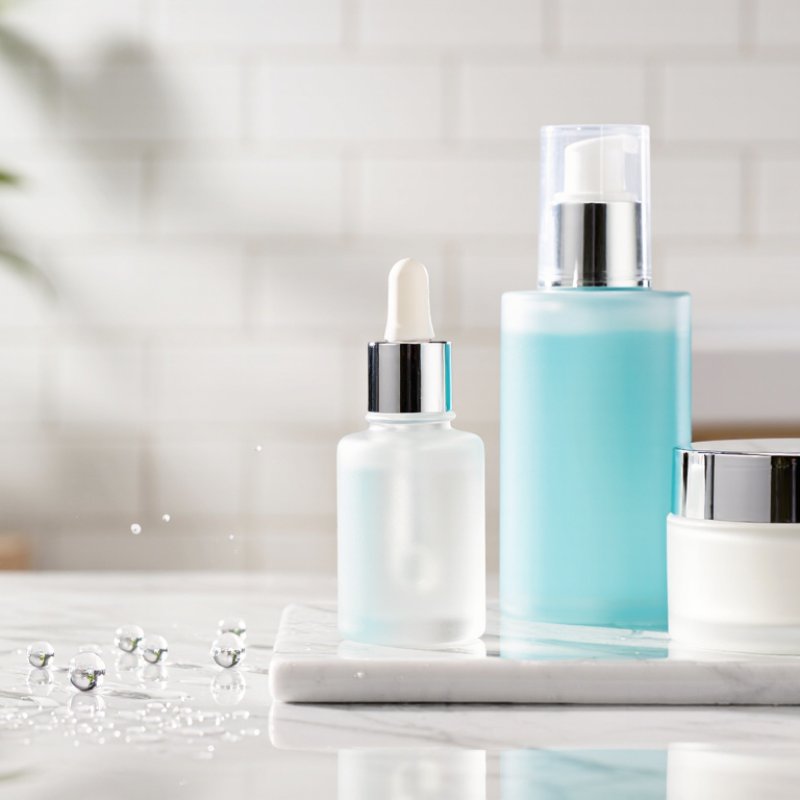
Why Choose Hydrating Skincare Products for Your Business?

What Are Hydrating Skincare Products?

Hydrating skincare products are designed to help skin attract, hold, and reduce water loss.

They are not simply watery creams. A balanced formula may combine humectants, such as glycerin, with emollients and gentle occlusives. Humectants draw water toward the outer skin layer. Emollients soften rough texture. Occlusives help slow evaporation. This structure supports clear, trustworthy product education.

Customers often confuse hydration with oiliness. They are different needs.

For a skincare business, hydration offers a practical and widely understood product category.

Dry indoor air, cleansing, and weather changes may leave skin feeling tight or flaky. A suitable moisturizer can improve comfort and support the skin barrier with regular use. Results vary, however. Fragrance, heavy textures, or unsuitable ingredients may discourage repeat purchases. A product may sound impressive yet feel uncomfortable after ten minutes.

That gap deserves honest testing, not confident promises. Claims should match evidence and local cosmetic regulations.

Tips:

Explain the difference between hydration and moisturization. Recommend applying products to slightly damp skin. Encourage a patch test before regular use. Offer texture choices, including gel, lotion, and cream. Review ingredient lists carefully. Keep instructions short and realistic. Do not promise instant skin repair.

Customer feedback may show that the “best” formula is not universal. That is worth remembering.

How Do Hydrating Ingredients Support Skin Health?

Hydrating skincare products help support the skin barrier, which limits excessive water loss from the surface. Humectants such as glycerin and hyaluronic acid attract water into the outer layers. Emollients smooth rough areas by filling tiny gaps between skin cells. Occlusive ingredients create a light protective film. Together, these ingredients can leave skin feeling softer and more comfortable.

The benefits become clearer in daily business use. A customer with tight, flaky cheeks may need a gentle cleanser and a moisturizer with barrier-supporting ingredients. Someone working in dry indoor air may prefer a richer texture at night. Ceramides, fatty acids, and soothing ingredients can complement hydration when the barrier feels stressed. However, texture matters. A formula that feels sticky may discourage regular use, even when its ingredients are well selected.

Hydration is not a cure-all. This deserves attention. Skin concerns can have different causes, and one product cannot suit everyone. Ingredient concentration, fragrance, preservatives, and the overall formula influence tolerance. Patch testing is a sensible step, especially for sensitive skin. Product descriptions should make clear, evidence-informed claims rather than promise dramatic results. In practice, consistent use, gentle cleansing, and sunscreen often support better skin comfort than adding many products at once.

Why Choose Hydrating Skincare Products for Your Business? - How Do Hydrating Ingredients Support Skin Health?

Hydrating Ingredient Primary Function How It Supports Skin Health Suitable Product Formats Business Value
Glycerin Humectant Attracts water to the outermost layer of the skin and helps improve the skin’s moisture content. Cleansers, lotions, creams, serums Versatile, widely used, and compatible with many skin-care formulations.
Hyaluronic Acid Water-binding humectant Helps bind water within the skin’s surface layers, supporting a smoother and temporarily plumper appearance. Serums, gels, emulsions, sheet masks Supports premium hydration positioning and lightweight product textures.
Urea Humectant and skin-conditioning agent Is part of the skin’s natural moisturizing factors and can help soften dry, rough skin when appropriately formulated. Body creams, foot creams, hand creams Creates opportunities for targeted dry-skin and intensive-care product lines.
Ceramides Barrier-supporting lipid Help replenish skin-identical lipids and support the organization of the stratum corneum barrier. Barrier creams, moisturizers, lotions Strengthens barrier-care positioning for dry or sensitive-skin audiences.
Panthenol Humectant and conditioning agent Helps maintain skin moisture and contributes to a soft, comfortable skin feel. After-sun products, creams, lotions, serums Useful for soothing, comfort-focused, and daily-moisturizing concepts.
Sodium PCA Natural moisturizing factor component Binds water and helps support hydration in the stratum corneum. Toners, serums, lotions, facial mists Enhances ingredient differentiation in lightweight hydration products.
Squalane Emollient Helps smooth the skin surface and reduce the rough feel associated with dryness. Facial oils, creams, moisturizers Adds a lightweight, silky sensory profile to moisturizing products.
Petrolatum Occlusive Forms a protective layer that substantially reduces transepidermal water loss from the skin surface. Ointments, barrier balms, intensive creams Provides dependable support for intensive moisture-retention products.
Colloidal Oatmeal Skin protectant and conditioning ingredient Helps soothe dry, irritated skin and supports moisture retention as part of a protective formulation. Body lotions, creams, wash-off products Supports sensitive-skin and comfort-oriented product categories.

Note: Product performance depends on the complete formulation, ingredient concentration, packaging, application method, and individual skin condition. Cosmetic claims should be supported by appropriate product testing and local regulatory requirements.

Which Customers Benefit Most from Hydrating Skincare?

Why Choose Hydrating Skincare Products for Your Business?

Customers with dry or tight-feeling skin often benefit most from hydrating skincare. Their skin may feel rough after cleansing, especially in cold weather or air-conditioned rooms. Older customers can also need more moisture because skin usually produces less oil with age. People with sensitive skin may prefer simple, fragrance-free formulas that support comfort without unnecessary complexity.

People with sensitive skin may prefer simple, fragrance-free formulas that support comfort without unnecessary complexity.

Environmental exposure matters too. Office workers, travelers, and outdoor professionals often notice temporary dryness after long hours in heated, cooled, or windy spaces. Customers using exfoliating products may also seek hydration when their skin feels uncomfortable. However, hydration does not solve every concern. A common mistake is treating all redness as dryness. Retail staff should avoid medical promises and encourage professional advice when irritation persists.

Business decisions should follow evidence, not only packaging trends. McKinsey’s 2023 beauty-market analysis estimates global beauty sales could reach about 580 billion dollars by 2027, with annual growth near 6%. Euromonitor International’s 2024 beauty research also highlights multifunctional products and sensitive-skin suitability as important consumer priorities. These findings support a focused range: lightweight lotions for daytime, richer creams for dry climates, and gentle options for reactive skin. Product education still needs improvement. Customers may misunderstand “hydrating” and “moisturizing,” while some formulas feel pleasant but provide limited lasting comfort.

McKinsey’s 2023 beauty-market analysis estimates global beauty sales could reach about 580 billion dollars by 2027, with annual growth near 6%.

How Can Businesses Select Effective Hydrating Products?

Businesses should choose hydrating skincare products through evidence, not attractive packaging. A clear ingredient list is a practical starting point. Look for proven humectants, such as glycerin or hyaluronic acid, and barrier-supporting ingredients, such as ceramides. The formula should match the intended customer. A lightweight lotion may suit oily skin, while a richer cream may help dry skin. Skin comfort matters. Fragrance, alcohol, and active ingredients can increase irritation for some users.

Ask suppliers for stability data, safety documentation, manufacturing details, and relevant testing. Check whether the packaging protects the formula from heat, light, and repeated contact. A pump can reduce contamination during daily use. Review independent clinical evidence when hydration claims sound unusually strong. Small studies may offer useful clues, but they do not prove universal results. I would also test samples with a limited, varied user group. Patch testing remains sensible. It is not a guarantee.

Track feedback after launch. Ask users about tightness, stinging, residue, and visible dryness after several hours. Record complaints consistently, rather than relying on a few enthusiastic comments. Price, refill options, shelf life, and delivery reliability also affect the business decision. Be honest about limitations. No product hydrates every skin type equally. A formula can perform well in a controlled test yet disappoint in a cold, dry office. Businesses should revise their choices when real customer evidence conflicts with early assumptions.

What Business Advantages Come from Offering Hydrating Skincare?

Hydrating skincare can give a business a practical advantage: it addresses a common daily concern across many customer groups.

Customers often notice comfort after cleansing, especially when skin feels tight or dry. That immediate experience can encourage repeat purchases. Small details matter.

Clear ingredient explanations also help staff answer questions with confidence. They should explain how humectants, emollients, and occlusive ingredients work without making medical promises.

Trust grows slowly. Reliable supplier documentation, safety testing, and transparent usage guidance make the product range more credible.

A focused hydration range can simplify merchandising and create useful add-on sales.

A cleanser, lightweight lotion, and richer night product can support different routines.

Salons and hospitality businesses may also use hydration products to improve the guest experience.

Soft towels, clean displays, and easy-to-read instructions make the benefit feel tangible. However, hydration is not automatically suitable for every customer. Some people dislike fragrance, rich textures, or certain ingredients.

Overstocking one texture can quietly reduce margins. That lesson is easy to miss.

Review sales patterns, customer feedback, and return reasons regularly. Adjust the range when evidence changes, rather than following seasonal enthusiasm alone.

Content from qualified cosmetic professionals can further support responsible product education.

FAQS

What are hydrating skincare products?

They help skin attract, hold, and reduce water loss. Common formulas combine humectants, emollients, and gentle occlusives. They are not simply watery creams.

How do humectants, emollients, and occlusives differ?

Humectants draw water toward the outer skin layer. Emollients soften rough areas. Occlusives form a light film that slows evaporation.

Is hydration the same as oiliness?

No. Hydration concerns water content, while oiliness concerns sebum. Skin can feel oily and still feel tight or dehydrated.

Which customers may benefit from hydrating skincare?

Customers with tight, flaky, or rough-feeling skin may benefit. Office workers, travelers, and outdoor workers may notice dryness after long exposure to air conditioning or wind.

Which textures should a skincare business offer?

Lightweight gels or lotions may suit daytime use. Richer creams can feel more comfortable at night or in dry climates. Preferences vary.

How should customers apply hydrating products?

Apply them to slightly damp skin after gentle cleansing. Use a small amount first. Too much product may feel sticky or heavy.

What ingredients may support a stressed skin barrier?

Glycerin and hyaluronic acid attract water. Ceramides and fatty acids can support a comfortable barrier. Fragrance-free formulas may suit some sensitive customers better.

Should customers patch-test hydrating skincare?

Yes, especially when skin is sensitive or reactive. Test a small area and watch for discomfort. A pleasant first use is not proof of long-term suitability.

Can hydrating skincare solve every skin concern?

No. Redness, irritation, or persistent discomfort may have different causes. Hydration is helpful, but it is not a cure-all. More products are not always better.

What claims should businesses make about hydrating products?

Claims should match available evidence and local cosmetic rules. Avoid promising instant repair or universal results. A formula may sound excellent but feel uncomfortable after ten minutes. That gap deserves review.

Conclusion

Hydrating Skincare Products are designed to help replenish and retain moisture in the skin, supporting a smoother, softer, and more comfortable appearance. Their formulas may include ingredients such as humectants, emollients, and occlusives, which work in different ways to attract water, strengthen the skin’s protective barrier, and reduce moisture loss. These products can benefit customers with dry, sensitive, mature, or environmentally stressed skin, while also serving people who want to maintain a healthy-looking complexion throughout the year.

For businesses, selecting effective hydrating products means evaluating ingredient quality, product texture, suitability for different skin types, packaging, and clear usage guidance. A well-planned range can address varied customer needs without making unrealistic claims. Offering reliable hydration-focused options may improve customer satisfaction, encourage repeat purchases, expand the target market, and create opportunities to build complementary skincare routines. In this way, hydrating products can support both better consumer experiences and sustainable business growth.

Amelia

Amelia

Amelia is a dedicated marketing professional with a strong understanding of product strategy, customer needs, and digital communication. As a key member of the company’s marketing team, she combines industry knowledge with clear, practical storytelling to help readers make informed decisions. Her......