
Sky Resources Knowledge Hub

Beauty & OEM Skincare Insights

Expert guidance on Halal cosmetic manufacturing, private label skincare trends, and formula innovation.

0%

Sensitive Skin Care Formulation is becoming a strategic priority, not merely a gentle marketing phrase. Consumers now inspect ingredient lists, fragrance claims, and clinical evidence before purchasing. Grand View Research’s 2024 skincare market analysis shows continued global category growth, while Mintel’s consumer research highlights rising interest in products designed for sensitive, reactive, and compromised skin. However, broad market growth does not guarantee trust. A soothing cream can still sting when its preservative system, pH, or fragrance residue is poorly controlled.

Professor Laurent Misery, a leading sensitive-skin researcher, defines the condition clearly: “Sensitive skin is defined by the occurrence of unpleasant sensations in response to stimuli that normally should not provoke such sensations.” His definition supports a formulation approach based on measurable triggers, not vague promises. In practice, that means screening surfactants, limiting unnecessary fragrance, testing packaging compatibility, and documenting irritation results. Small details matter. A tight pump. A clean rinse. No burning after application.

Industry reports provide direction, but they cannot replace product experience or dermatological assessment. A 2024 Cosmetics Europe market report also reflects consumers’ growing demand for safety, transparency, and responsible product communication. Still, the category has a weakness: “hypoallergenic” is often treated as a complete solution. It is not. Brands should explain test methods, participant conditions, and limitations honestly. Sensitive Skin Care Formulation requires restraint, evidence, and repeated refinement. Sometimes, the best formula is not the most luxurious one. It is the one users can apply every morning without hesitation.
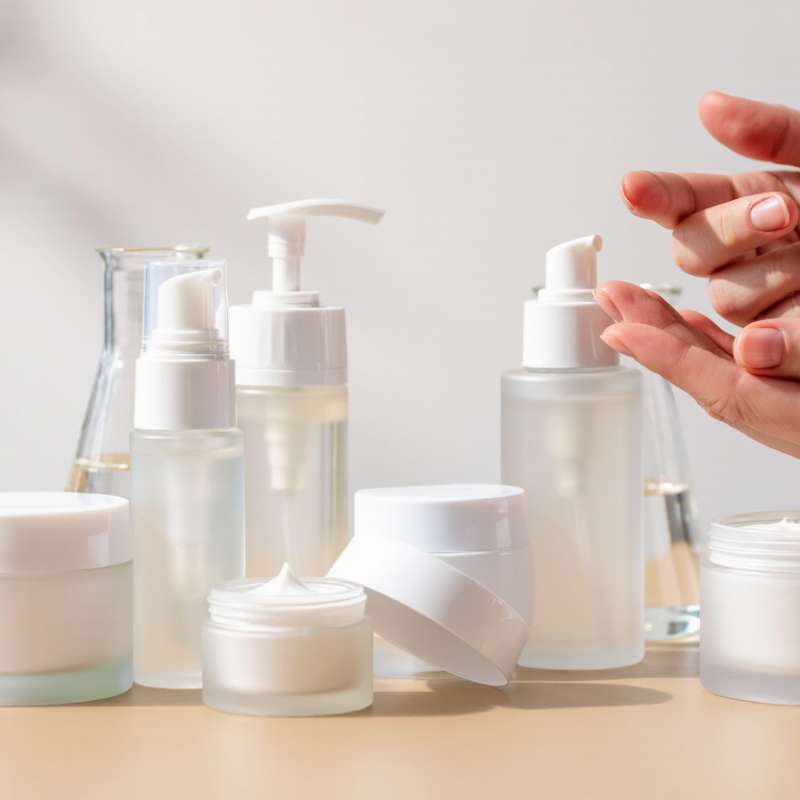
Why Choose Sensitive Skin Care Formulation for Your Brand?

What Is a Sensitive Skin Care Formulation?

Sensitive skin care formulation is a product design approach for skin that may react easily to environmental stress, strong cleansing, or certain ingredients. It considers the complete formula, not just one “gentle” ingredient. The goal is to reduce unnecessary irritation while maintaining effective cleansing, hydration, or barrier support. A careful formula may use mild surfactants, skin-compatible moisturizers, and a balanced pH. It may also limit fragrance and known sensitizers. Still, “natural” does not automatically mean gentle. That distinction matters.

In professional development, formulators assess ingredient levels, pH, preservation, fragrance allergens, surfactant strength, and texture. Small changes can matter. A cleanser that feels comfortable on the hand may feel tight on facial skin. Product evaluation should include stability checks, safety reviews, and controlled user feedback. No result is universal. Even a carefully assessed product may irritate some users. This is where honest communication and continuous improvement become important.

Tips: Define the target skin concern before selecting ingredients. Request stability and safety data from qualified manufacturing partners. Check the finished product, not only its raw materials. Patch testing can provide useful personal feedback, but it is not a guarantee. Keep product claims precise. A formula may be mild, yet still need improvement after real-world use.

Why Sensitive Skin Needs Specialized Product Development

Why Choose Sensitive Skin Care Formulation for Your Brand?

Sensitive skin needs specialized product development because its protective barrier may react to ordinary ingredients. The National Eczema Association estimates that 31.6 million Americans live with eczema. This figure shows the scale of barrier-related concerns. However, sensitive skin is not identical to eczema. It can involve tightness, stinging, redness, or sudden discomfort. Formulators should assess these experiences separately. A gentle label alone proves very little.

Reliable development starts with a short ingredient list and clear testing stages. The American Academy of Dermatology recommends fragrance-free products for easily irritated skin. Fragrance-free does not always mean allergen-free, so careful review remains essential. Formulas should support hydration without creating a heavy, sticky film. Preservative systems also require close evaluation. Microbial safety cannot be sacrificed for softness. In practice, repeat insult patch testing, stability testing, and consumer-use trials can reveal weaknesses that laboratory screening misses. This is where development becomes less tidy, but more honest.

Tips: Use measured claims, not promises. Screen fragrances, essential oils, and harsh surfactants early. Test on varied sensitive-skin profiles. Record stinging within minutes, not only visible redness. Ask whether the product remains comfortable after cleansing. A formula may pass one test and still disappoint real users. That possibility deserves attention.

Key Ingredients and Safety Standards for Sensitive Skin

Why Choose Sensitive Skin Care Formulation for Your Brand?

Sensitive skin products require more than a gentle-sounding label. The formula should use well-tolerated ingredients, such as glycerin, panthenol, squalane, and colloidal oatmeal. These ingredients can support moisture and comfort without creating unnecessary stress for the skin. However, natural ingredients are not automatically safer. Botanical extracts may still trigger reactions in some users.

A careful formulation also needs a skin-friendly pH, controlled fragrance levels, and suitable preservatives. Fragrance-free does not mean risk-free. Every ingredient should be reviewed for irritation and sensitization concerns. Stability testing checks whether the product changes under heat, light, or repeated opening. Microbiological and preservative challenge testing provide further evidence of product safety. Manufacturing should follow recognized quality systems, such as ISO 22716 where applicable, while local cosmetic regulations must guide final claims and labeling.

Tips: Keep the ingredient list focused. Test finished products on sensitive-skin volunteers under professional supervision. Use clear directions, including patch testing advice. Avoid promising “zero irritation,” because individual reactions remain possible. No formula is perfect. Even experienced teams may need to revise texture, preservation, or packaging after real-world feedback. That reflection builds trust and improves reliability over time.

Why Choose Sensitive Skin Care Formulation for Your Brand? - Key Ingredients and Safety Standards for Sensitive Skin

Formulation Dimension Ingredient or Standard Primary Role Suitability for Sensitive Skin Formulation Considerations Relevant Safety or Quality Reference
Barrier Support Ceramides Help support the skin barrier by replenishing lipids naturally found in the stratum corneum. Generally well tolerated Use in a balanced lipid system with suitable humectants and emollients; verify stability and compatibility with the base. Evaluate through finished-product safety assessment and skin-compatibility testing.
Barrier Support Glycerin Humectant that attracts and retains water in the outer layers of the skin. Commonly suitable Excessive levels may affect sensory properties; formulate with adequate emollient and occlusive support. Ingredient safety should be assessed in the final formula and intended use conditions.
Barrier Support Hyaluronic Acid Humectant that helps improve skin hydration and reduces the feeling of dryness. Generally well tolerated Choose molecular grades and concentrations according to the product format, pH, viscosity, and sensory target. Confirm microbiological quality, stability, and finished-product safety.
Soothing Support Panthenol Provitamin B5 used as a moisturizing and skin-conditioning ingredient. Generally suitable Confirm compatibility with preservatives and packaging; avoid unsupported claims such as treating dermatitis. Claims should be supported by product-specific evidence and applicable cosmetic regulations.
Soothing Support Allantoin Skin-conditioning ingredient commonly used to help maintain a smooth and comfortable skin feel. Often used in gentle formulas Check solubility, crystallization risk, and processing temperature within the selected formulation. Perform stability, compatibility, and safety evaluation on the finished product.
Soothing Support Colloidal Oatmeal Provides skin-protective and soothing properties and can help relieve the sensation of dryness. Suitable for many users Consider allergen communication, raw-material specifications, particle dispersion, and microbial control. Check local regulatory status and substantiate any skin-protection or soothing claims.
Emollience Squalane Emollient that helps soften the skin and reduce rough, dry feel. Typically well tolerated Assess oxidation stability, source specifications, sensory profile, and interaction with the packaging system. Use documented raw-material quality standards and a completed safety assessment.
Cleansing Mild Surfactant System Removes dirt, sunscreen, and excess oil while aiming to minimize barrier disruption. Prefer low-irritancy systems Control surfactant type, total active matter, pH, contact time, and rinseability; avoid overly aggressive cleansing claims. Conduct irritation and ocular-compatibility assessments appropriate to the intended use.
Fragrance Policy Fragrance-Free Option Removes added fragrance as a potential source of sensory discomfort or contact allergy for some users. Preferred for highly reactive users “Fragrance-free” does not mean allergen-free; botanical extracts and essential oils require separate assessment. Follow applicable fragrance-allergen labeling rules and verify the complete ingredient declaration.
Preservation Preservative System Helps prevent microbial growth in products containing water. Essential for product safety Use the lowest effective level permitted by applicable law; validate with preservative efficacy testing and monitor pH. ISO 11930 provides a reference method for evaluating antimicrobial protection of cosmetic products.
pH Control Skin-Compatible pH Range Supports product tolerability and formulation stability when appropriate for the product type. Product-dependent Do not use a single pH target for every product; set the range according to the formula, use area, preservative system, and packaging. Verify pH during stability testing and define suitable acceptance criteria.
Testing Dermatological Compatibility Testing Assesses whether a finished product is tolerated under defined test conditions. Important for positioning Use an appropriately designed study with documented protocol, participant criteria, exposure conditions, and reporting. ISO 10993-23 may provide useful principles for irritation assessment, where applicable; cosmetic claims require suitable substantiation.
Quality Management Good Manufacturing Practice Helps ensure consistent manufacturing, hygiene, documentation, traceability, and quality control. Core safety requirement Implement controlled procedures for raw materials, production, deviations, complaints, recalls, and change management. ISO 22716 is the internationally recognized guideline for good manufacturing practices for cosmetics.
Safety Assessment Finished-Product Safety Report Documents the toxicological and exposure-based evaluation of the cosmetic product. Required in many markets Include ingredient data, exposure assumptions, impurities, microbiological quality, packaging interaction, and assessor conclusions. Requirements vary by jurisdiction; the European Union requires a cosmetic product safety report under Regulation (EC) No 1223/2009.
Consumer Guidance Patch-Test Guidance Encourages consumers to test a small area before wider use, especially when their skin is reactive. Helpful precaution Clearly state that a consumer patch test cannot guarantee the absence of irritation or allergy; provide stop-use advice. Consumer instructions should be accurate, non-diagnostic, and consistent with the product’s safety evaluation.
Note: Ingredient suitability is not absolute. Final tolerability depends on concentration, purity, formulation, packaging, exposure, user condition, and individual sensitivity. All products should undergo a documented safety assessment before market placement.

How Sensitive Skin Formulas Benefit Your Brand

Why Choose Sensitive Skin Care Formulation for Your Brand?

Sensitive skin formulas can help your brand earn trust through comfort, clarity, and careful product development. Many consumers avoid products after experiencing stinging, tightness, or visible redness. A thoughtfully designed formula can reduce unnecessary triggers by limiting fragrance, harsh surfactants, and excessive active ingredients. However, “gentle” should never be an unsupported promise. Product claims need reliable testing and clear evidence.

Experienced formulators usually begin with a simple ingredient strategy. They assess each raw material, review supplier documentation, and test the formula for stability, compatibility, and skin tolerance. Small details matter. A cleanser should rinse without leaving a dry, squeaky feeling. A cream should spread evenly, without pilling under sunscreen. Consumer patch testing can reveal useful feedback, although it cannot predict every individual reaction. No formula suits everyone. That limitation deserves honest communication.

Tips: Keep the ingredient list focused. Test packaging with the finished formula. Use controlled user studies when possible. Explain how the product should be used, especially around the eyes. Avoid promising “zero irritation,” because even familiar ingredients may affect reactive skin. Review complaints carefully, not defensively. That feedback can expose weaknesses in texture, dosage, or instructions. Sensitive skin care is not simply a softer marketing angle. It requires patience, documented decisions, and a willingness to improve the formula when real-world use proves your assumptions incomplete.

Why Choose Sensitive Skin Care Formulation for Your Brand?

Sensitive-skin positioning addresses a substantial consumer need. A multinational survey found that many adults describe their skin as sensitive or very sensitive, creating an opportunity for brands to prioritize gentle, fragrance-free and barrier-supportive formulas.

Share of adults reporting sensitive or very sensitive skin by region. Source: Misery et al., “A new ten-country study on sensitive skin,” Contact Dermatitis, 2019. Regional values are rounded for presentation.

How to Develop and Validate a Sensitive Skin Product Line

Developing a sensitive skin product line starts with a clear definition of sensitivity. The formula should avoid unnecessary fragrance, harsh surfactants, and common irritants. However, “gentle” is not a complete scientific standard. Product teams should review ingredient safety data and define measurable performance targets.

Laboratory screening can assess pH, viscosity, microbial quality, and preservative effectiveness. Stability testing should examine heat, cold, light, and repeated opening. Small details matter. Packaging must limit contamination and reduce excessive rubbing during use. A qualified safety assessor can review the formula, exposure level, and intended consumer group. Regulatory requirements should guide every claim and label statement.

Human validation adds practical evidence. A controlled patch test may identify irritation before broader consumer use. A supervised use test can record redness, dryness, stinging, and comfort over several weeks. Participants should reflect the product’s intended audience, including people with reactive skin histories. Clear consent and documented procedures improve reliability.

No formula is perfect. That assumption can fail. A test result may look reassuring while users still report discomfort in daily conditions. Teams should investigate these differences, adjust the formula carefully, and repeat critical tests. Keeping batch records, test reports, complaint reviews, and decision notes strengthens accountability. This disciplined process helps a brand develop products that are not only mild in theory, but dependable in real routines.

FAQS

Why does sensitive skin need specialized product development?

Sensitive skin may sting, tighten, redden, or feel suddenly uncomfortable. Ordinary formulas can disturb its protective barrier. One gentle label is not enough.

Which ingredients may support sensitive skin?

Glycerin, panthenol, squalane, and colloidal oatmeal can support hydration and comfort. Natural extracts are not automatically safer. Some botanicals may still trigger reactions.

Should sensitive skin products contain fragrance?

Fragrance-free formulas are generally preferred for easily irritated skin. However, fragrance-free does not mean risk-free. Essential oils and botanical scents also need careful review.

What testing should a sensitive skin product complete?

Development may include pH, viscosity, microbial, stability, and preservative testing. Patch testing can identify irritation early. Supervised use trials show daily comfort more clearly.

How should human testing be conducted?

Participants should represent the intended users, including people with reactive skin histories. Track redness, dryness, and stinging over several weeks. Record discomfort within minutes.

Why do packaging and preservation matter?

Packaging should limit contamination and reduce excessive rubbing during use. Preservatives must protect microbial safety without creating unnecessary irritation. Softness cannot replace safety.

What claims are suitable for sensitive skin products?

Use measured claims supported by test results. Avoid promises such as “zero irritation.” Individual reactions remain possible. Claims can still sound careful and useful.

Can a formula pass testing and still disappoint users?

Yes. Laboratory results may look reassuring while daily users report stinging after cleansing. That gap deserves investigation. Teams may need to revise texture, preservation, or packaging.

What makes sensitive skin development more reliable?

Keep ingredient lists focused and document batches, complaints, test reports, and decisions. Repeat critical tests after changes. No formula is perfect. That assumption can fail.

Conclusion

Sensitive Skin Care Formulation is a specialized approach to developing products for skin that is easily irritated, reactive, or prone to redness and discomfort. It focuses on gentle, carefully selected ingredients, simple formulas, and strict safety standards to reduce potential triggers while supporting the skin’s natural barrier. Effective development considers factors such as fragrance, preservatives, texture, pH balance, and ingredient compatibility, ensuring that each product is both comfortable and suitable for daily use.

For a business, creating sensitive skin products can strengthen consumer trust, address a growing skincare need, and build a more thoughtful product portfolio. The development process should include clear product goals, ingredient screening, stability and compatibility testing, safety assessments, and appropriate user evaluations. By validating performance and tolerability before launch, a well-designed sensitive skin line can offer reliable experiences, communicate quality responsibly, and provide lasting value to consumers seeking gentle skincare solutions.

Amelia

Amelia

Amelia is a dedicated marketing professional with a strong understanding of product strategy, customer needs, and digital communication. As a key member of the company’s marketing team, she combines industry knowledge with clear, practical storytelling to help readers make informed decisions. Her......